Skip to content

Matthew Paul: Poetry & Stuff

  • About
  • Books
  • Contact
  • Haiku
  • Links
  • Poems, essays and reviews
  • Readings

  • September stuff

    Yesterday was my 54th birthday. With Covid restrictions in place, it was inevitably a rather quiet one; not that I would have lasted till the 10 o’clock pub curfew anyway.

    I was chuffed to receive a copy of the lovely-looking 14 Magazine, edited by Richard Skinner, in which I have a poem called ‘The Bidding’. It’s been a busy week for poetry journals arriving: The Rialto, PN Review, The Dark Horse and Poetry Review all came too, so I have lots to read, besides all the books on the go.

    Meanwhile, I’ve written a couple of reviews in the last week – my latest OPOI review for Sphinx and two longer ones which will appear in another journal early next year – and, to my surprise, had some poems accepted which I had almost given up hope of ever getting published, which is jolly nice.

    Here’s a photo of the Thames this morning when I was pootling along to work. All very mellow.

    September 30, 2020

  • The last six months

    Six months on from the start of Lockdown in England, I’ve been reflecting on the good things which I’ve experienced during that period. Here is a list, in no particular order.

    The heightened awareness of mortality caused by the scandalously high Covid death rates in the UK, USA and other countries run by right-wing fools has made me more than ever keen to use my time wisely. My productivity at work has had to become more prodigious thanks to some unforeseen events, such as the Minister for Schools deciding that lockdown during the Covid pandemic is the perfect time to close a primary school in one of the two London boroughs for which I work. I’m fortunate, of course, not to be a frontline worker who’s had to deal with the daily horrors of the pandemic. As a school place planner, it’s been frustrating to see the timelines for new state-funded schools, especially two desperately needed special schools, recede further into the future.

    For the last six weeks or so, I’ve had an added role, of being our community interest company’s lead on ‘Outbreak Control Planning’, which means that, aside from attending lots of meetings with Public Health, I’ve had to work with my own Education and Social Care colleagues to ensure that our offices and other settings are ‘Covid secure’; that is, that they are each as safe as possible an environment for staff to be able to make a gradual return to the workplace. We have a bubble and rota system in place for teams and individuals who have made that return, so that in every fortnight they spend half their time in the office/setting and half at home. It is largely going well and enabling teams to make the robust collaborative decisions which they can only do properly when they are co-located. No doubt, though, the seemingly inevitable second lockdown will soon scupper our handiwork.

    Outside my paid employment, my labour on my poems and reviews has also increased in productivity: I’ve been writing and editing poems with what I can only call fervour. I’m not quite like Anthony Burgess who, when told by his doctor that he had only six months to live, wrote four novels as a way of providing a lasting income for his wife and children, but I’ve certainly been on it. My output has pleasingly included at least three poems which have been hanging about in the back of my mind for years.

    I’ve very much enjoyed the weekly blog posts compendium assembled by American poet, and all-round good egg, Dave Bonta. His generosity is much to be admired and the blogs which he’s highlighted have invariably been eye-openingly excellent.

    I’ve also enjoyed poet and friend Kathy Pimlott’s photographs of virtually, and sometimes completely, deserted streets of London and Nottingham, which she has posted on Facebook and Twitter. Kathy’s attention to detail, especially of doors and gates, has been fascinating, but no surprise since her poems are rich with detail and depictive quality.

    Much has been written about meetings by Zoom, Google Meet and the lamentable MS Teams. In general terms, I can only add that online work meetings have been more focused and more courteous, with much less interruption and talking over one another. For poetry, it’s been a boon, of course, enabling launches and readings to be attended from anywhere in the world, and Leicester. Not that I’ve been to that many – work’s been so full-on that frequently the last thing I’ve wanted to do of an evening is continue to stare at a screen. There have been some memorable events, though, chief among them Happenstance readings/webinars involving Alan Buckley and Charlotte Gann, in support of their respective brilliant recent collections. It isn’t the same as being there in person, naturally, because you can’t go and talk to the poets after and get them to sign copies of their books, or natter to other poet friends.

    Write Out Loud Woking, hosted by the estimable double act of Greg Freeman and Rodney Wood, has seamlessly gravitated from the cafe in The Lightbox to Zoom, enabling guest readers from far afield to join in the fun, welcoming and diverse proceedings. I’ve tried out five or six new poems in those Zoom readings, which has been very helpful for hearing where the poems catch and need tweaking. More to the point, it’s been lovely to see all the regulars, like Karen Izod, Heather Moulson, Ray Pool and Greg and Rodney themselves.

    The Red Door Poets have also moved to Zoom and at a time of day more conducive to my occasional attendance. I’ve also attended a few Poetry Business virtual residential weekends and one-off workshops, all of which were as inspiring as if they were in-person.

    Heading towards the last session of this current, 2019–2021, Poetry Business Writing School programme, I’ve been grouped with Jim Caruth and Philip Rush, two poets whose distinctively personal poetries are right up my street. So far, we’ve had two very enjoyable Zoom sessions, comparing notes on various poets’ poems and workshopping our own, with another session due soon, shortly before the final Zoom session with Ann and Peter Sansom and the other participants. The plan is still, I think, that, Covid restrictions permitting, there will be an end-of-programme celebration next February or so at the Wordsworth Trust at Dove Cottage in Grasmere. I know from last time how exciting a prospect that is.

    Regular readers of this blog will know that thanks to Kathy Pimlott and Mat Riches’s encouragement, I got in touch with Nell Nelson with a view to reviewing poetry pamphlets for Sphinx. In the last few months, I’ve written quite a few of them and much enjoyed doing so. I have another one to write now, plus some longer reviews for a well-known print journal. The MO of writing Sphinx reviews is not to dwell on the weaknesses of the poems or pamphlets as a whole, but to highlight their positive aspects. That brings with it an endearing nobility of spirit, albeit that I have sometimes had to stop myself from buying a one-way ticket to Superlative City – and very occasionally had the opposite problem. Reviewing is not just good for the soul, though: it also freshens one’s critical perception, which in turn improves one’s self-editing ability, and, like any writing, sharpens one’s concision too.

    I’ve been glad to see a burgeoning interest in writing haiku among UK poets. Some, like the aforementioned Philip Rush and marvellous Julie Mellor have taken to it with real aplomb. Others, though, can’t seem to grasp that the point of writing haiku is not to churn out any old rubbish in three lines of five, seven and five syllables. Twas ever thus. My own interest in haiku has been revived, partly due to my involvement in an exciting forthcoming haiku project.

    I further developed an obsession with the life and work of Edward (Ed) Burra, which has seen me buy and devour every book, and write a dozen poems, about him. I have some Burra research trips planned, Covid permitting.

    I’ve been working my way through a 2007 biography of John Donne, by John Stubbs, which, whilst it contains some irksome anachronistic asides, sets out how Donne, an ironmonger’s son, turned from serial womaniser to husband/father and then, in widowerhood, to serial sermoniser as Dean of St Paul’s. It seems that Donne did everything he could to avoid taking holy orders and was far keener to gain a powerful post at Court which he would long ago have obtained but for his marriage to Ann More against his father-in-law and employer’s wishes. Interesting, too, was his pragmatic journey from his inherited Catholicism to High Church pillar of the reformed Church of England, especially given that his mother was for many years banished from England for her faith, that his brother Henry died a martyr and that several uncles and other predecessors were Jesuits. The regular occurrences of bubonic plague lend Donne’s story a contemporary resonance of sorts. Stubbs rarely contextualises Donne’s poetry to good effect, but as a book to fill in the gaps and flesh out the man, it does the job.

    On the poetry front itself, I’ve been reading, amongst others, Mike Barlow, Jennifer Copley, Robert Hamberger, Ian Hamilton, Theophilus Kwek, Jackie Wills, and I have a large pile of goodies to tuck into this autumn, including more Ciaran Carson, Geraldine Clarkson, Jonathan Davidson’s A Commonplace, Julian Stannard and Derek Walcott. Besides all that, there are journals to read.

    I’m very fortunate to have been featured on the websites of two outstanding poets, Fokkina McDonnell and Heather Moulson, and to have been part of John Foggin’s wonderful When All This is Over project.

    When out running or walking, I’ve encountered far more instances of impromptu smiles and/or chats with strangers, which is rare in urban south-east England but always heart-warming. I hope that continues.

    I shouldn’t forget the weather. Here, where Surrey escapes from London, it was a beautiful summer of sunny days in the main. Not that I often got much further out in the sun than my regular runs took me. The sunshine is persisting – for the moment. 

    September 20, 2020

  • Hampton Court haiku 4

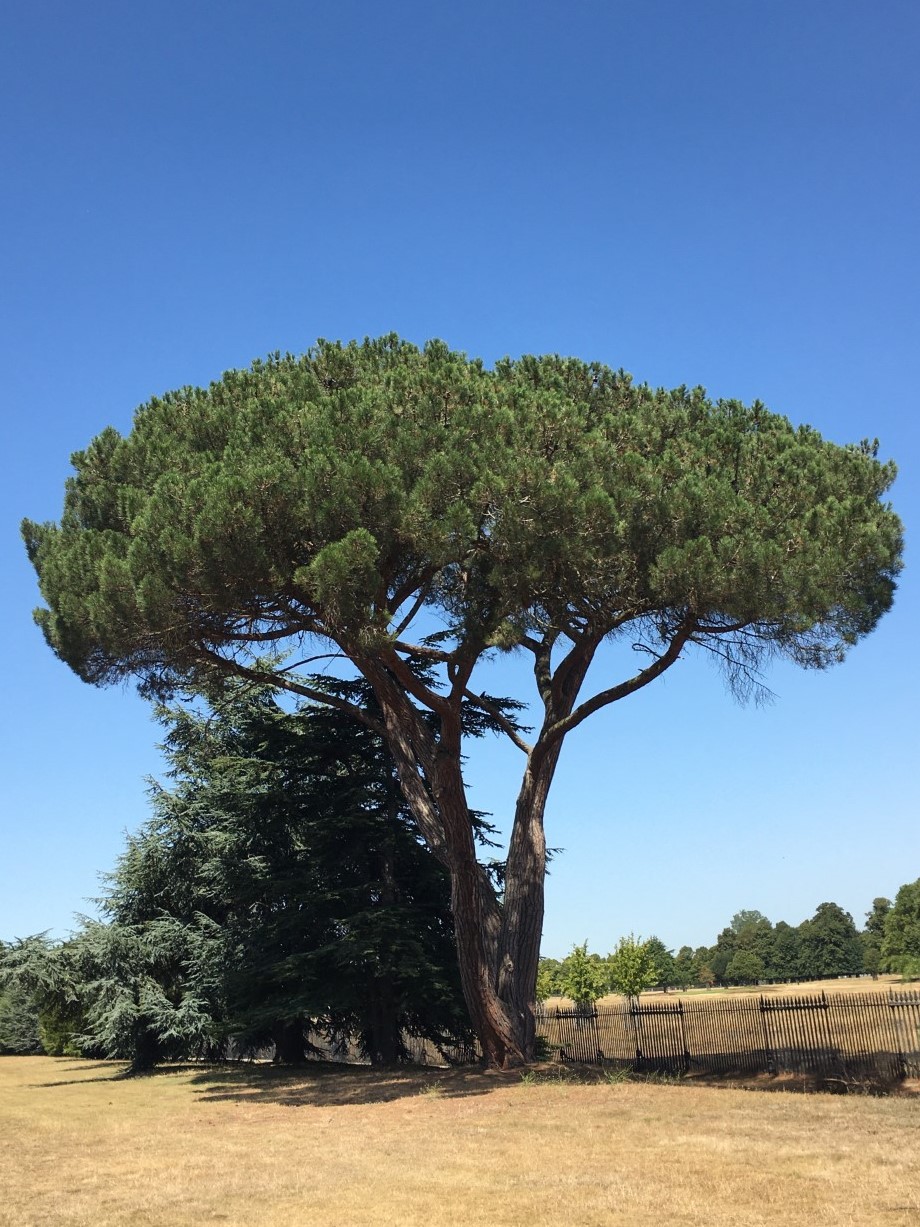
    Stone pine

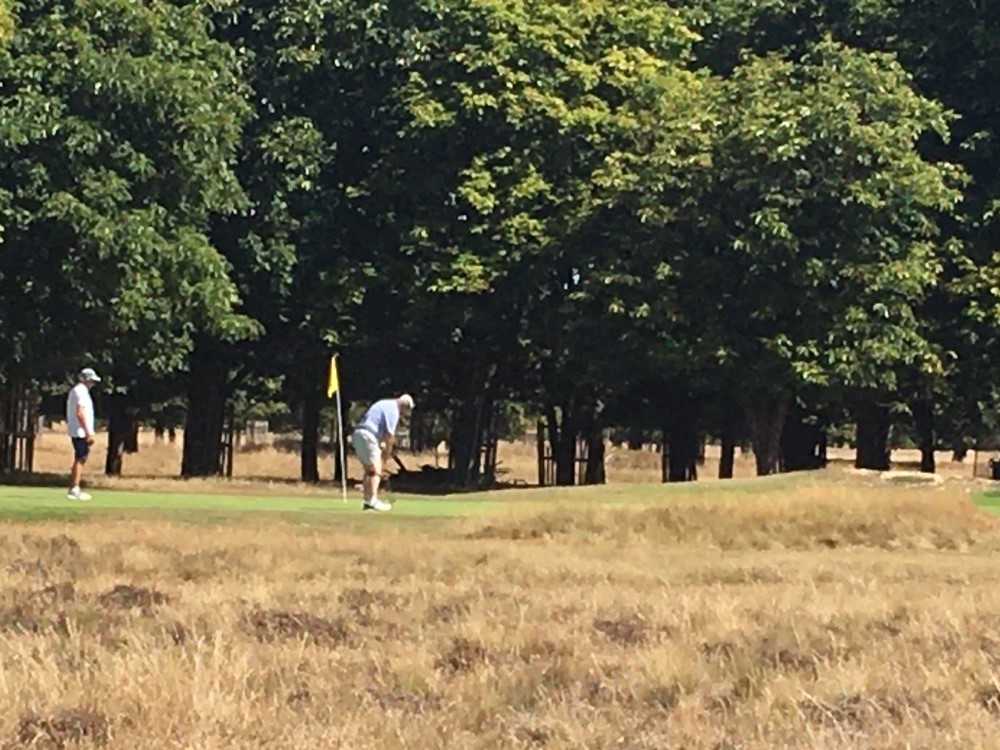
    Golf

    stone pine—
    a golf buggy skirts
    the parched fairway

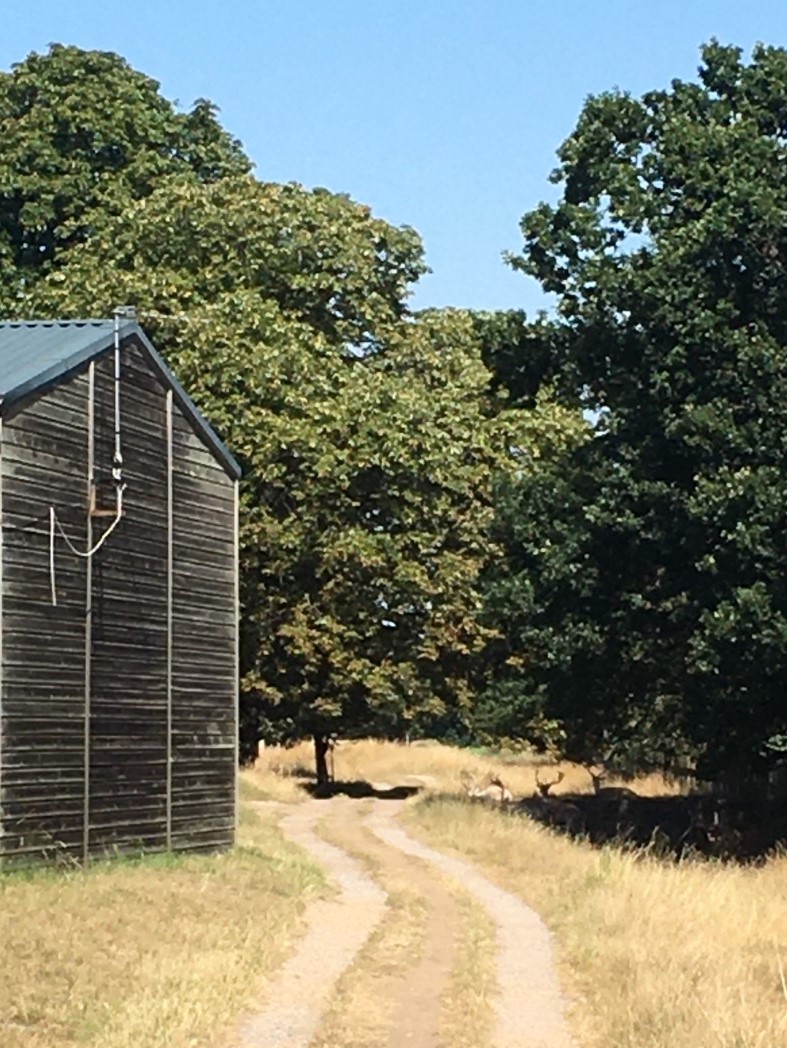
    Antlers

    Trunk

    Leaping 1

    horse chestnut shade
    the tiptoes buck stretches
    to pilfer leaves

    Leaping 2

    Loosestrife

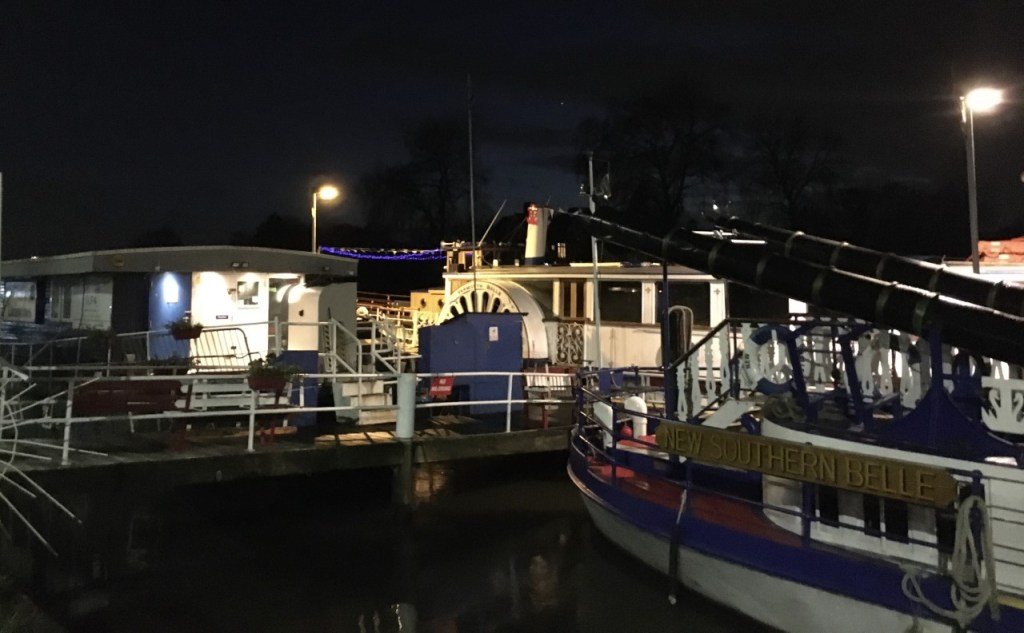
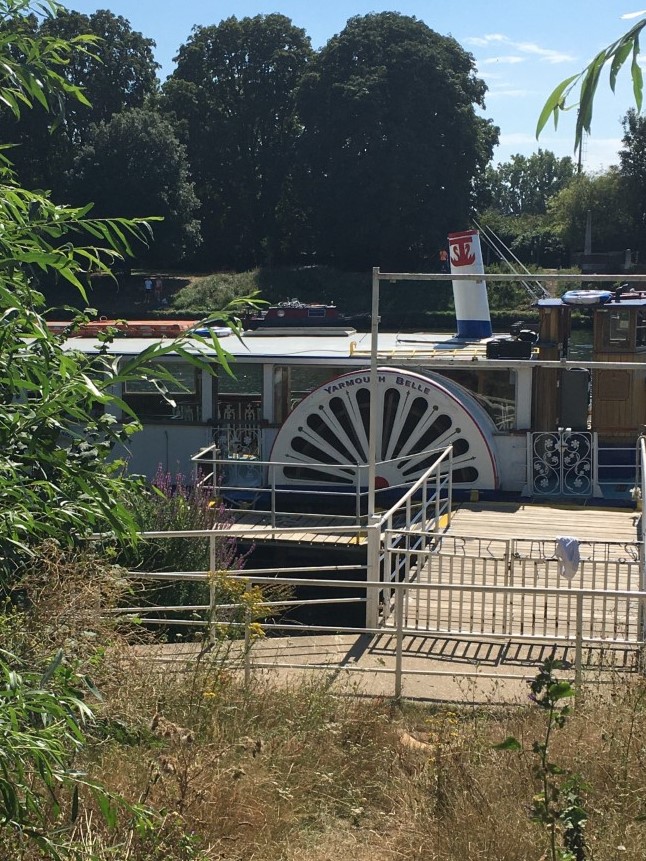
    Boat

    no room on the Thames
    for swans to sprint into flight—
    loosestrife and tansy

    Belle

    August 7, 2020

  • Mediterranean Poetry

    I have two poems on the sun-drenched Mediterrean Poetry poetry website today: one new one, part of a sequence responding to the life and work of Edward Burra; and one from my collection.

    August 3, 2020

  • New reviews on Sphinx

    There is a new batch of reviews up on Sphinx, among which are no less than three excellent reviews of Richie McCaffery’s new pamphlet, First Hare, and my review of Ben Ray’s New Poets’ Prize-winning pamphlet, The Kindness of the Eel. As ever, Sphinx is a tremendous resource for anyone looking for new poetry pamphlets.

    July 31, 2020

  • Some summer haiku

    Here are some of my summer haiku from over the years:

    summer sales
    a Caravaggio
    chalked on the kerb

    *

    summer fete
    the Punch and Judy man
    losing his voices

    *

    behind the long pebble beach the filaments of wild fennel

    *

    all the shovelers up-ending August dusk

    *

    scissoring low
    between lamb and ewe: 
    the heatwave swallows

    *

    house martins jink
    between seafront hotels . . .
    mint choc chip


    1–2: from The Regulars, 2006. 
    3–4: from The Lammas Lands, 2015.
    5: from Presence 52.
    6: from The Haiku Calendar 2018.

    July 29, 2020

  • When All This is Over again

    Some distinguished contributors, notably Julie Mellor, have already reflected, via blogs and other social media, on the Calder Valley Poetry anthology, When All This is Over, conceived by John Foggin. Here are some further thoughts of my own.

    I’ve said previously that it was a brilliantly simple idea, to ask poets to respond to Eiléan Ní Chuilleanáin’s poem ‘Swineherd’. Each poet who heeded John’s call was tasked with writing a poem from the perspective of someone with an occupation beginning with a particular letter of the alphabet. 70 or 80 poets did so, including some who gamely took on more than one letter and occupation. Kim Moore then selected the 26 poems for the eventual pamphlet.

    John allocated ‘K’ to me, and, unusually quickly, I came up with ‘Kitman’, in which the titular character dreams of what my poet–friend Maggie Reed (another fine contributor) has described as “an idiosyncratic tour of Europe”, revisiting cities where his football club had played during one long-ago journey to the UEFA Cup quarter-finals. I rarely produce anything half-decent when tasked with writing to order, but I really enjoyed it this time. It must’ve been the constraints of the Covid-19 Lockdown; the fact, as John notes on the back of the anthology, that, “So many of us were locked down, locked in, waiting for ‘It’ all to be over”, and which freed my brain, as it apparently did for everyone else who submitted. Covid, the UK Government’s pitiful and unforgivably dreadful response to it, and the consequently high numbers of deaths it caused, somehow made me more obsessive than usual about work, so this project was a very welcome relief.

    There are so many likable tours de force amongst the 26 new poems gathered in the anthology that it almost feels wrong to single one out, but because the project was his genius idea, it seems apt to throw the spotlight on John’s ‘Night Soil Man’. It’s a poem which intrigues from the title onwards: in the 18th and 19th Centuries, night soil men were employed to take away the faeces – the ‘night soil’ – deposited in chamber pots throughout the night. No wonder then that this particular night soil man says that, ‘when all this over’, he’ll, ‘have a fire, sift ashes, boil up lye and scour/ the cart, holystone it white as bone’. As anyone who’s familiar with John’s poetry knows, he unerringly gets the tone of the language right and uses rich vocabulary when it’s called for. The narrator continues:

    I’ll currycomb the old horse, I’ll braid his mane
    and oil his hoofs. The cart I’ll paint with roses,
    like a varda or a barge, and we’ll ride out
    past Beeston, past the forcing sheds,

    find a quiet place where he can graze, and I’ll imagine
    I can smell the grass. Scent is a language
    I shall relearn, said the night soil man:
    lavender, sage and cedar; woodsmoke, lemons.

    This is lovely, imaginative writing, with the confidence to use words and terms – currycomb, varda and forcing sheds – which may be obscure to some readers, but which, with omniscience at their fingertips, they would find themselves compelled to look up. That line ‘Scent is a language/ I shall relearn’ is a beautiful one per se, and even more so in the context of this poem.

    I won’t quote any more lines from the poem, because it deserves to be read in its entirety, from the page, at the very middle of this smashing little anthology containing big, hearty poems. The beautiful, surprising ending of ‘Night Soil Man’ alone is worth the pamphlet’s bargain price.

    I should say a final word for Bob Horne’s superb production – as neatly as it’s turned out, it sits as neatly in the hand.

    When All This is Over, Calder Valley Poetry, £7.20 (inc. p&p).

    July 27, 2020

  • Fokkina McDonnell’s blog

    I’m delighted that Fokkina McDonnell has featured four poems of mine on her excellent blog. There is a lot of good stuff among Fokkina’s previous posts, not least her own wonderful poems.

    July 5, 2020

  • On John Foggin’s ‘When All This is Over’ project

    Over on his ever-excellent blog, John Foggin recently revealed the names of the poets behind the 26 ‘When All This is Over’ poems chosen, out of 80 or so which were submitted, for publication in a Calder Valley Poetry pamphlet. Like many great ideas, this project has a perfect simplicity to it, and it has been a real pleasure to be involved in it. To be one of the 26 in the pamphlet, among some wonderful poets, is a lovely bonus.

    I won’t single out any of the amazing poems except to say that the title of Sue Riley’s marvellous ‘The Cats’ Meat Man’ reminds me of a saying of my dad’s – “Quick, quick, cats’ meat!” – the derivation of which I can’t recall him ever explaining. I suppose it was just that if we didn’t hurry up doing whatever it was he was geeing us up to do, we would end up as cats’ meat. Or something like that!

    June 18, 2020

  • Hampton Court haiku 3

    sky1

    wayside hawkweed
    skylark after skylark
    burbles its best

    sky2

    June 14, 2020

  • Hampton Court haiku 2

    Hedge mustard

    scaffolding up
    hedge mustard renovates
    the palace wall

    June 6, 2020

  • The Beach Hut

    ‘Half Board at the Alum Sands Hotel’, the poem from which the title of my collection The Evening Entertainment derives, is featured over at The Beach Hut. Now that holidays for Brits this year (if we have them at all) will have to be ‘staycations’, its posting seems quite timely.

    June 4, 2020

  • Five English tanka

    I’ve written comparatively few tanka over the years – probably no more than fifty. Those which have any merit are fewer still. Writing worthy tanka is a difficult art, let alone doing so in English without the cultural allusions which infuse Japanese tanka. Those poets – such as John Barlow, Claire Everett and Alison Williams – who consistently manage to do so are therefore rare.

    My five tanka below are presented not because I think they are especially good, but because they remind me of the great outdoors, specifically the richly different environments of England, which seem like distant memories during this Lockdown time.

    The second and fifth of them were published in the Australian tanka journal, Eucalypt, founded and originally edited by Beverley George. The fourth was published in an online anthology edited by Rodney Williams and published by M. Kei.

    The fifth was subject to a generous appraisal by the Anglo-Australian poet Yvonne Hales, with whom I subsequently corresponded and wrote several rengay, a renku form invented by the American haiku poet Garry Gay. Yvonne’s analysis spookily captures the precise mood I was seeking to convey.

    I wonder when it will be safe enough to visit these places again.

    *

    leaving Burscough,

    the sprightly two-car train
    of the West Lancs. Line

    improvises a slicker rhythm,

    springs lapwing from the fields

    black geese
    stream across the estuary
    to Blue House Farm
    my threadbare thoughts
    strewn to the wind

    over sea-grass beds
    the water possesses
    a deeper turquoise . . .
    how pebbles coalesce
    to make Elberry Cove

    the sunlit chalkstream
    slaps around the arches
    of the old stone bridge—
    all afternoon I watch
    goosanders at their work

    climbing Bredon
    to an iron-age camp
    towards dusk
    fallow deer skedaddle
    over terracotta fields

    June 1, 2020

  • Poetry and psychedelia – part 2

    Last night I was thinking about the 1987 television programme, It Was Twenty Years Ago Today, shown on ITV 20 years and a few days after the release of Sgt Pepper. I video-taped it and must have watched it many times in the autumn of that year, after I’d been to West Berlin for three months with my university friend Caroline and her sister Sharon.

    It was a feature-length documentary, in which Allen Ginsberg – by then distinguished, with his beard neatly-trimmed and wearing a jacket and tie – appraised, with his trademark enthusiasm, every track on the album. His verdicts were intercut with interviews with: McCartney, doing his revisionist utmost to play down the impact of LSD on the Fab Four’s output; a typically much more honest Harrison; and many leading counter-cultural figures, like Timothy Leary, Abbie Hoffman, Paul Kantner and Michelle Phillips. Perhaps the most vivid testimony was provided by the Beatles’ publicist Derek Taylor, who could still scarcely believe his luck that he had ended up at the epicentre of a cultural revolution, and the actor–activist–writer Peter Coyote, who remained unapologetically committed to the radical politics he’d espoused two decades before. The most memorable moments come when composer and musicologist Wilfred Mellers heaps high praise on ‘She’s Leaving Home’.

    The film can’t be bettered as a celebration and overview of why the Beatles’ music mattered; how it rivalled, influenced and was influenced by theoutput of the Byrds and then the Beach Boys; and how it fitted in with and influenced the broader Western, especially American, culture, happenings and be-ins of its era. What it largely didn’t do, though, is examine the more peculiarly British Psychedelic aspects of the music. You could argue that the Beatles hit their peak of those aspects, and possibly per se, on 1966’s Revolver, the album immediately preceding Sgt Pepper; and that the latter, for all the indisputable virtues which the programme articulated, was an overblown self-parody to a degree.

    Anyhow, Ginsberg talking about the Beatles reminds me that he wrote a poem – ‘Portland Coliseum’ – about one of their gigs, which took place on 27 August 1965, and which he included in his 1968 collection, Planet News (the title of which Dylan’s 1974 album Planet Waves must deliberately echo).

    Ginsberg
    It’s in Ginsberg’s customary Whitmanesque/Blakean rhapsodic tones:

    A single whistling sound of
            ten thousand children’s
                  larynxes asinging
                  pierce the ears
            and flowing up the belly
            bliss the moment arrived

    Apparition, four brown English
             jacket christhair boys
    Goofed Ringo battling bright
                         white drums
    Silent George hair patient
                          Soul horse
    Short black-skulled Paul
                    wit thin guitar
    Lennon the captain, his mouth
                   a triangular smile,
    all jump together to End
             some tearful memory song
                           ancient two years

    And so on. Those last two lines quoted are Ginsberg at his perceptive best: so often the Beatles’ songs concerned nostalgia and they moved on so quickly in their progression as musicians that their songs took on a timeless, ‘ancient’ spirit as soon as they became known. The description of Harrison, the band’s deep thinker, as a ‘soul horse’. seems right too Lennon had long since given way to McCartney as ‘the captain’ by the time Planet News was published, as Ian MacDonald approvingly noted in his indispensable Revolution in the Head. In this recording of ‘Portland Coliseum’, Ginsberg adds words here and there (though not everywhere), and a whole new line towards the end. As a witness to the Beatles’ power, the poem captures their pre-acid pomp with a kaleidoscopic clarity.

    Ginsberg had less convincingly referred to the Beatles in a previous poem, ‘Who Be Kind To’, from earlier that same summer: ‘the boom bom that bounces in the joyful/ bowels as the Liverpool Minstrels of/ CavernSink’.

    Strangely, though, Ginsberg for all his avant-garde and leftish leanings seems to have written no poems which addressed the oppression of Afro-Americans. The gig in Portland was just 11 days after the Watts riots in LA, a thousand miles south along the Pacific coast. (As I write, LA, like many cities in America has just woken up after its fourth consecutive night of protest as a result of yet more Black people being murdered by the forces of law and order.) Similarly, the film barely contains any context about the battle for Civil Rights. For all that, though, it’s still a charming and entertaining piece of television, oddly eccentric in places. Amazingly, I still have the tape, though no machine to play it on.

    May 31, 2020

  • OPOI review of Noelle Kocot’s Humanity

    Here is another review for the wonderful Sphinx. There are so many reviews on the site – it really is worth a good long browse or two.

    May 30, 2020

  • Poetry and psychedelia – part 1

    Last night, I watched Bryan Forbes’ 1966 comedy The Wrong Box for the first time in 30-odd years and found it to be as pleasantly daft as I remembered it to be. It features superb comic turns from Ralph Richardson and Wilfred Lawson – as, respectively, an elderly polymath with verbal diarrhoea and a decrepit butler ironically named Peacock – outshining other stars, among them Michael Caine, Forbes’ wife Nanette Newman (she was in most of his films), Pete ‘n’ Dud, wonderfully multi-talented Irene Handl, Peter Sellers, and, in his last film appearance, Tony Hancock. (Like many British comedies of the mid- to late-Sixties, it was overstuffed with cameos, including fleeting shots of Leonard Rossiter, Nicholas Parsons and omnipresent Norman Rossington.)

    What I didn’t recall, though, was the charming brilliance of John Barry’s theme tune: at once a beautiful, sweeping melody, but with a melancholic, heart-achingly nostalgic undertone. It’s symptomatic of that British, perhaps more specifically English, penchant for harking back to a golden, Edwardian age which probably never really existed for the overwhelming majority of people and which the Great War obliterated. Larkin’s ‘MCMXIV’ trades in that territory. Of course, a perverted form of this tendency undoubtedly informs the mindset of Little Englanders still today. Yet in one of its more benevolent manifestations, it was a – probably the – key component of the British version of psychedelia, a rather different beast to its darker, understandably more politicised American counterpart. (There’s more than a country mile between ‘Strawberry Fields Forever’ and ‘The Red Telephone’.) Rob Chapman, in his magisterial survey Psychedelia and Other Colours, notes that the nostalgic element of British psychedelia was more of a regression to childhood than anything else, especially so for the Beatles:

    ‘She Said She Said’ [on Revolver] simply wants to go back to the imagined security of childhood. This regressive aspect is most evident in the way the line ‘When I was a boy’ leaps out of the song, initiating a sudden change of tempo and an equally abrupt mood swing. The wording is significant: not ‘Everything was fine’, as in the weather, as in complacent hippie platitudes, but ‘everything was right’. In the midst of chemically induced turmoil Lennon clings to childhood certainties. In the middle of the Beatles’ most revolutionary musical period it’s not the Hacienda that must be built but an infant Arcadia. ‘It was just an “acidy” song, I suppose,’ he later mused. ‘“When I was a boy,” you see. A lot of early childhood was coming out. It’s a throwaway reflection delivered with typical Lennon insouciance, but its implications informed the next eighteen months of the Beatles’ output and, indeed, the next eighteen months of UK psychedelia. Childhood and nostalgia would become the leitmotifs of some of their finest psychedelic work. (pp.278–9)

    Chapman goes on to articulate in detail how “the tendency towards reflection and nostalgia would also dominate the mood of Sgt Pepper’s Lonely Hearts Club Band and the Magical Mystery Tour film and EP” (p.279).

    It’s the same tendency which saturated HG Wells’ The History of Mr Polly and George Orwell’s Coming Up for Air and other novels of theirs, and less obviously Virginia Woolf’s Orlando. At its odder, more surreal extreme it’s evident in Lewis Carroll’s Alice books and in Enid Blyton’s four Faraway Tree books which took me very far away when they were read to my class at Malden Manor Infant School. (Wells and Carroll are both among the cast of the famous and not-so-famous on Jann Haworth and Peter Blake’s cover for Sgt Pepper.) The British film output of the Sixties and early-Seventies was awash with sun-hazed nostalgia, including Jonathan Miller’s extra-trippy TV adaptation of Alice in Wonderland.

    Incidentally, Chapman also expertly outlines the influence of Music Hall and more recent British popular culture per se on the Beatles, the Small Faces and other British psychedelic acts. Naturally, there were other influences which fed in to the rich outpouring too: not least drugs, pastoralism and endearing silliness, and, for the Beatles, Donovan, the Incredible String Band and others, a variably genuine Orientalist love of Eastern, especially Indian, music and mysticism. Sitar adorned everything.

    For my generation, born slap-bang in the middle of this spectacular cultural culmination, there was a feeling, as we grew into our teens in Thatcher’s Britain of the Eighties, that we’d lucked out; that we’d missed most of the fun. (Fortunately, the Eighties itself proved to be a golden cultural period of its own, presided over by one who was most definitely there 15 years before, John Peel.) But the music and culture of late-Sixties Britain obsessed my friends and me: repeats, for the first time since the early Seventies, of The Avengers and The Prisoner on Channel 4 around 1984–5 beamed droll, but totally believable surrealism into our living rooms and minds. The fact that my dad, ostensibly uninterested in that cultural zenith, would years later habitually say ‘Be seeing you’ upon his departure just like McGoohan’s Number 6, brought it all together for me in a way that little else could. At the same time, London Weekend Television would regularly show The Wicker Man, and BBC2 would give occasional airings to the films of Michael Reeves. Films and programmes like those had their weird antecedents in all kinds of places: the films of Powell and Pressburger; novels by the likes of John Wyndham and Rex Warner; art by Agar, Armstrong, Burra, the (unrelated) Carringtons Dora and Leonora, Hillier, Paul Nash, Stanley Spencer and many others; The Goon Show; and so much else besides.

    So when I write about the past, it’s invariably through a hazy, sun-drenched, bucolic, slightly disturbed kaleidoscope, but in the knowledge that nostalgia can be defined as ‘a feeling of pleasure and also slight sadness when you think about things that happened in the past’ (my emphasis). The past can only ever be simultaneously alluring and melancholy-inducing. For these reasons, whilst I’d hesitate to describe myself as a ‘psychedelic poet’, which sounds a little bit silly, I like to think that my poems often have a dollop of good old British psychedelia somewhere within them, occasionally right on the surface, as readers of The Evening Entertainment would hopefully attest. And if anything, more poems are getting more melancholy with every passing year. No doubt that is a common trait.

    May 23, 2020

  • OPOI review of Clive McWilliam’s Rose Mining

    Here is my latest review for Sphinx.

    May 21, 2020

  • On numbers

    Over on Twitter the other day, Matthew Stewart tweeted a picture of a poem concerning his childhood phone number, from his excellent collection The Knives of Villalejo, and wondered what numbers other folk remembered. When he tweeted the same question previously, it somehow sparked off the following poem of mine – not about our family phone number when I was a child, but the registration number of my dad’s car.

    OYF 747L

    After perusing all the latest features on cars in Which?,
    my father part-exchanged his grey Austin Cambridge,

    at Lancaster’s showrooms on the crest of Surbiton Hill,
    for a shimmery, maroon Austin Maxi, whose original

    virtue, winked the salesman, was how the seats folded
    virtually flat, to fashion an ad hoc four-foot-wide bed—

    an eyebrow-raising choice, perhaps, for a family man,
    who didn’t appear the chap to drive a passion wagon.

    May 17, 2020

  • On the use of names in poems

    I often write poems which tell stories, in either an overt narrative or in a purposefully less obvious manner, so naming characters is something I give a lot of thought to. What I’ve concluded – though this isn’t any major revelation – is that there’s a balance to be struck between names which have an element of nominative determination (e.g. when I first had a bank account, the bank’s manager was one Mr Money) and those which have no such connotation but somehow feel appropriate.

    Out walking this morning, I was thinking about this again, and how the names of characters in other art forms might give some pointers about that balance. I mulled over highly successful TV comedies which feature flawed yet likeable (in degrees) lead roles. I could have written about the names of characters in Shakespeare’s plays or Dickens’ novels, but that would be too obvious; so bear with me, please, as I consider why characters were named as they were in three famous programmes and then think about how that might apply in poetry.

    Take, for instance, Ray Galton and Alan Simpson’s timelessly brilliant, often Absurdist, sitcom Steptoe and Son. ‘Steptoe’ sounds like a surname they invented, but it isn’t; it’s an old name, of Anglo-Saxon origin apparently. What it does have is an allusion, intended or otherwise, to the father and son metaphorically stepping on each other’s toes, especially Albert, the father, on those of his son, Harold, as if irritation and argument are their perpetual way of life, which of course they are. It might also be an allusion to the sense that however much Harold dreams of escape from his father’s repulsive, leer-gurning, emotional-blackmailing behaviour, the movement of his feet from their yard and rickety house in Shepherd’s Bush will never result in anything more than a few steps away and then a few steps back to the place which he knows, in his heart, he can never really leave. For all that, the name isn’t one which spells out those connotations. By contrast, the name of the horse – Hercules – which pulls their rag and bone cart has a more obvious allusion.

    David Croft and Jimmy Perry’s joyous ensemble comedy Dad’s Army has a ream of characters so the quality of the names is vital in establishing them. Captain Mainwaring’s surname is as subtly perfect as that of the Steptoes: pompous and pretentious like the character himself, it’s pronounced as ‘Mannering’, as though the character spends his whole time in an activity – putting on appearances – as a gerund all of its own. Yet, it’s a name which gets mispronounced, much to the character’s chagrin, as ‘Main-wearing’, mostly by his superior officers and sometimes, in an exaggerated, professional-Welshman fashion, by an occasional character, Mr Cheeseman – a name which itself was delicately chosen: not obviously Welsh but lending itself to heavy Welsh-accented stressing on both its syllables by the character himself, and which is mildly amusing to boot. Both Sergeant Wilson and Corporal Jones have simpler, more common, more patently British surnames than Mainwaring, with its Norman origins, and also have plain first names, Arthur and Jack respectively. Those choices work effectively in part because Captain Mainwaring sees himself as the embodiment of Englishness (reinforced by his first name being infrequently revealed to be George), standing resolutely against ‘Jerry’, and because he sees himself as being socially superior to them both, despite Wilson having been privately educated in contrast to himself. (A great deal of the comedy in the programme derives from class differences, principally between the social climbing of Mainwaring and the social descent of Wilson.) Private Godfrey has a surname which is more commonly found as a rather quaint first name, its feyness wholly in keeping with the character’s doddery eccentricity, and its first syllable maybe letting the viewer know that this is a good man. Private Frazer, a stereotyped, Scotch-soused Scotsman who’s mean with money and ever keen to connive against Mainwaring’s authority, has a surname redolent of ‘freezer’, which is appropriate for his doom-mongering undertaker persona. Private Pike’s fierce-sounding surname ironically suits his personality as a scared-teenager who has aspirations of being a strong, brave warrior. Mainwaring’s nemesis, the ARP Warden Hodges, is largely known simply as ‘Hodges’, a name which, like Mainwaring’s own, has a playful determinism to it, because he constantly budges in to try and thwart Mainwaring’s plans – i.e. the name becomes a verb. Of the major characters, only the spiv, Private Walker, has a surname which appears to be throwaway; maybe Croft and Perry felt that it would be excessive to bestow upon him a surname which was in some way associative of his wheeler–dealer traits.

    The names of more peripheral characters in Dad’s Army are also carefully coined. Mrs Pike, has a first name, Mavis, which alludes to her busy, sparrow-like nature. The rather affected vicar’s full name is the Reverend Timothy Farthing, though he is usually referred to only as ‘Reverend’. His belligerent verger is called Mr Yeatman, with an aggressively-sounded first syllable subconsciously reminiscent, perhaps, of ‘hate’. Jones’s fur-draped, saucy-postcard-like love/lust interest is more directly-named: Mrs Fox. Godfrey’s sister Dolly, whom he frequently refers to, has a name which fits like a counterpart to him. One character named just for the fun of it, presumably, is the largely non-speaking Private Sponge; and the never-seen and barely-heard Mrs Mainwaring has a first name of Elizabeth, which Arthur Lowe, as Mainwaring, enunciates like an elocutionist and never shortens, implying that she comes from a higher class than him. What’s evident is that Croft and Perry devoted time and effort to getting the character’s names right in order to elicit as much additional shade as possible.

    In Ricky Gervais and Stephen Merchant’s The Office, the anti-heroic monster David Brent has a common first name and a surname which is a place-name that isn’t a place – although it’s named after a tributary of the Thames, Brent is an administrative place-name only, for a London Borough. Nobody, surely, would describe themselves as coming from Brent, in the same way that nobody would say they are from Elmbridge, Spelthorne or Tameside – or indeed Merton, which became the stage surname of Paul Martin, comedian and writer, and, unforgettably, of Caroline Aherne’s comedy talk show host, Mrs Merton. The very artificiality of the name Brent therefore adds a certain something to the vacuous, tyrannical self-centredness of the character who wants everyone to love him. In contrast, the more heroic character Tim has the surname Canterbury, a ‘real’ place, with all its historical associations. It can’t be a coincidence that the lead female character, Dawn Tinsley, with a cheery, sunshine-bringing first name, has a surname which is so close to that of Gail Tilsley (as was), a character in Coronation Street who, over many years, has endured a series of difficult relationships, reflective of Dawn’s own predicament with the dreadful sexist skinflint, Lee. The status-driven character Gareth Keenan has a first name which somehow fits him, with his terrible haircut, and his surname puns on ‘keen one’: the TA soldier at the weekends who is ever anxious to play his part. Finchy is a perfect moniker for a gregarious, loquacious gobshite. Neil Godwin, like Tim Canterbury, has a reliable Anglo-Saxon solidity to his name, and his surname subconsciously puns on ‘good one’. I wasn’t the greatest fan of The Office, but its integrity, over just 12 episodes and a Christmas special, was surely helped by using names which gave the characters universality and relatability.

    I could go on and on with other examples: Detectorists, Dinner Ladies, Fawlty Towers, etc. Dramatists of all types must think long and hard about their characters, from every angle, and that will always include the names, unless of course they make them anonymous, which is another matter altogether: not every story needs any, or all, of its character(s) to be named, but unless the story is very short, there will almost always be minimum requirements in order to provide clarity for the viewer (or reader).

    So what, I hear you ask, is the relevance of all this to poetry? In essence, well-chosen names can augment the sense of a poem well-made. Specificity, as in other ways, adds colour and nuances, both explicit and implicit, but, as with all things, a balance needs to be achieved. If every poem had a whole host of characters, that would probably be too much.

    Sinéad Morrissey’s bravura poem ‘Display’ (from Parallax, 2013) concerning the Women’s League of Health and Beauty (WLHB), lovingly draws out the bizarre qualities of a mass demonstration by WLHB groups in Hyde Park in 1936 and makes an obvious comparison with the League of German Maidens – the girls’ equivalent of the boys’ Hitler Youth – from which the WLHB founder Mary Bagot Stack gained her inspiration. Bagot Stack is name-checked, perhaps for slight comic effect, towards the end of the poem, but it’s the way in which Morrissey gives names to some of the otherwise anonymous “fifteen thousand women’ and their local groups which grabs my attention:

                          It could be snowing, and they of Bromley–Croydon, Slough
    Glasgow, Belfast, would don no more than a pair of satin knickers
    and a sleeveless satin vest to spin and stretch and bow
    the body beautiful. Athens in London, under a sodden sky,
    and Winnie and Molly and Doris metamorphosed.

    This is superb, detailed and utterly compelling poetry, not least the repetitions of “satin” and their similarity to “sodden”, but how much more so because of the names? “Bromley–Croydon” has an honest, neighbourly south London conurbation-ness to it. Since the poem is set in the year of the Berlin Olympics which celebrated the Nazis’ perverted love for ‘Aryan’ ideals of fitness and bodily perfection, that hanging “Slough” is neatly associative of something else of which the Nazis were overly fond: the “friendly bombs’ in John Betjeman’s poem ‘Slough’, written a year later. (Coincidentally, Slough is also the setting for The Office.) “Glasgow” and “Belfast”, used as synecdoche for Scotland and Northern Ireland, widen out the WLHB as a nationwide movement in the reader’s mind. “Athens” then takes the poem to a much different time and place: to those of the original Olympic ideals which the Nazis twisted for their own means. The poem might be implying here that the Nazis’ imitators in Britain, whether Bagot-Stack, Mosley or whoever, were slightly less fanatical fascists, but still dangerous ones, and the ordinary women – here the working-class forenamed and non-surnamed “Winnie and Molly and Doris’ – who represent the WLHB membership as a whole might either be members for those dark ideological reasons or for the fun of the exercise. (As the end of the Phoney War showed, by Christmas 1940 more than a thousand Blackshirts and other Nazi sympathisers and assorted anti-Semitic fanatics and cranks were rounded up and imprisoned under Regulation 18B of the Defence (General) Regulations 1939. It’s a digression, but worth noting that even Henry Williamson, the author of Tarka the Otter, was a prominent member of the BUF – had the Nazis successfully invaded, one wonders if he would have become the British Hamsun or Céline.) There’s also a nice musicality between “Winnie and Molly and Doris”: between the second syllables of “Winnie and Molly” and then the first syllables of “Molly and Doris”. It’s fair to say that without the admirable specificity of these everywoman names, and without the place-names too, Morrissey’s poem would have been substantially weaker and markedly less interesting. (Incidentally, the poem has an added relevance for me, as my mother was an active member of the WLHB, or ‘League’ as she called it, for 50 years, from not long after my birth onwards. For most of that time, even when she was approaching her eighties, she was among the younger members.)

    A better-known example is Philip Larkin’s poem ‘Mr Bleaney’, from The Whitsun Weddings, 1964, which features not just the well-named titular character but also “the Frinton folk/ Who put him up for summer holidays,/ And Christmas at his sister’s house in Stoke.” Would the naming of the “Frinton folk” or Mr Bleaney’s sister have added more interest or over-egged the pudding? (I wonder, too, if Mr Bleaney’s name inspired Mr Bean, or perhaps it was just a nod to another everyman, Mr Benn.)

    In her taut and exceptional collection, Noir (2016), Charlotte Gann skilfully deploys names in several poems. ‘Mrs Coulter’s Scissors’ is neatly titled – does ‘Coulter’ remind the reader of ‘cutter’? ‘Her Publisher’ doesn’t name the ‘her’ of the title, but features “Malcolm”, whom we gather is the eponymous character. The penultimate line of the poem is beautifully memorable: “Malcolm’s eyes are the colour of clear sky.” The extraordinary poem ‘In the Classroom of Touch’ features “Mr Farnham” demonstrating “‘how you hold a person’”, with the help of two pupils in turn, “Lydia” and “Giles”. The scene’s power and unsettling wonder – either more than a little creepy or rather lovely, or simultaneously both, depending on your point of view – are indisputably enhanced by names which are entirely believable.

    May 14, 2020

  • Molesey Riviera haiku

    M1

    M2

    yellow iris
    no ferry running
    today or tomorrow

    M3

    M4

    May 12, 2020

Previous Page Next Page

Blog at WordPress.com.


Loading Comments...
 

    • Subscribe Subscribed
      • Matthew Paul: Poetry & Stuff
      • Join 147 other subscribers
      • Already have a WordPress.com account? Log in now.
      • Matthew Paul: Poetry & Stuff
      • Subscribe Subscribed
      • Sign up
      • Log in
      • Report this content
      • View site in Reader
      • Manage subscriptions
      • Collapse this bar