Widdop

Last week, I was on an Arvon course at Lumb Bank – a ‘retreat with walking’, tutored, or, more accurately, led, by local mapmaker extraordinaire Chris Goddard and novelist–poet Paul Kingsnorth. Being in Ted Hughes Country in a heatwave meant that I had the time and opportunity to take huge delight in the landscape. Chris knew its paths, even through the woods, and its history so well that he was a brilliant guide. Chris’s books are like Wainwright’s, but with more detail and less trenchant opinions.
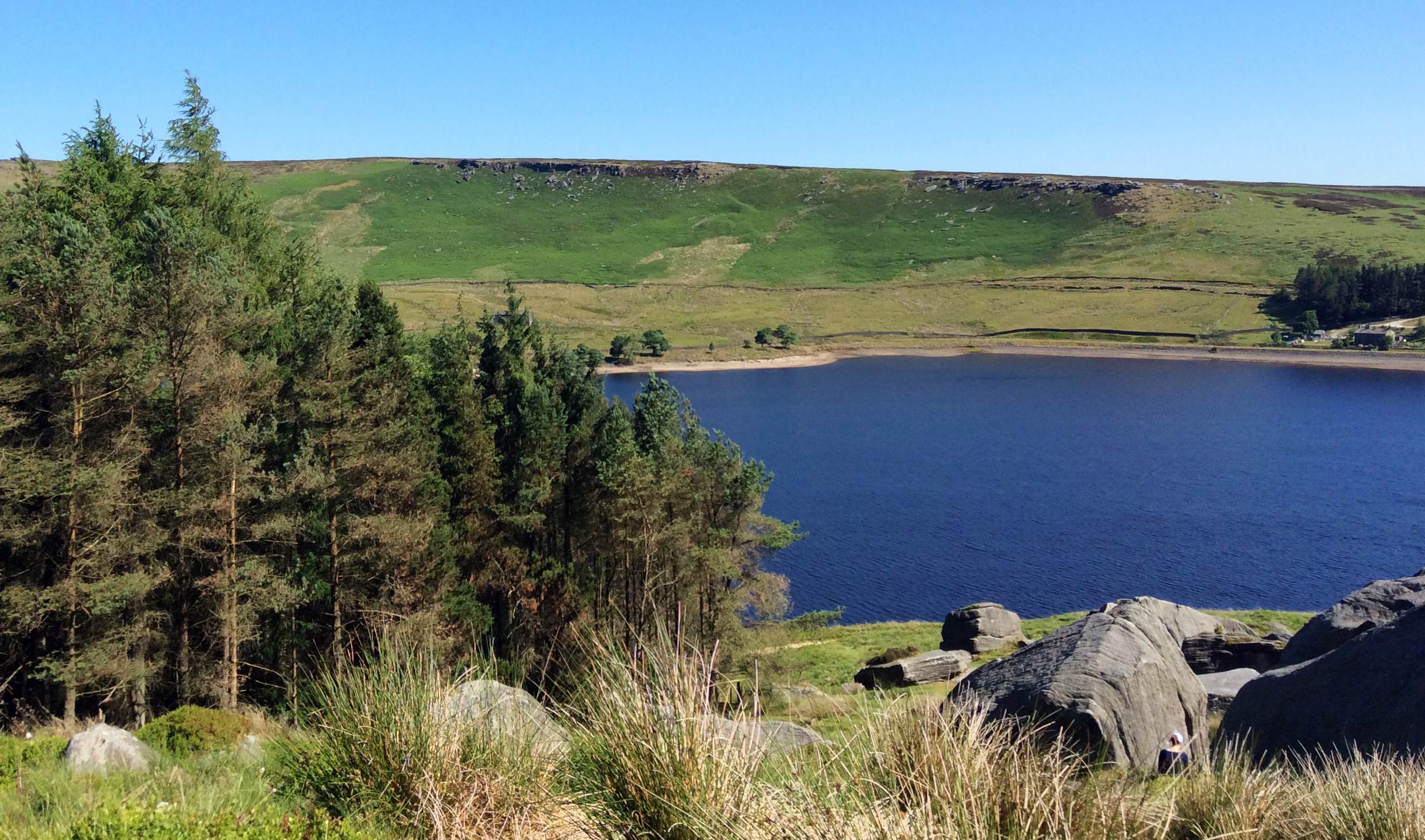
Widdop 1

One day, Chris met us up at Widdop Reservoir, the subject of one of Hughes’s loveliest poems, ‘Widdop’, from one of his best collections, Remains of Elmet (1979).
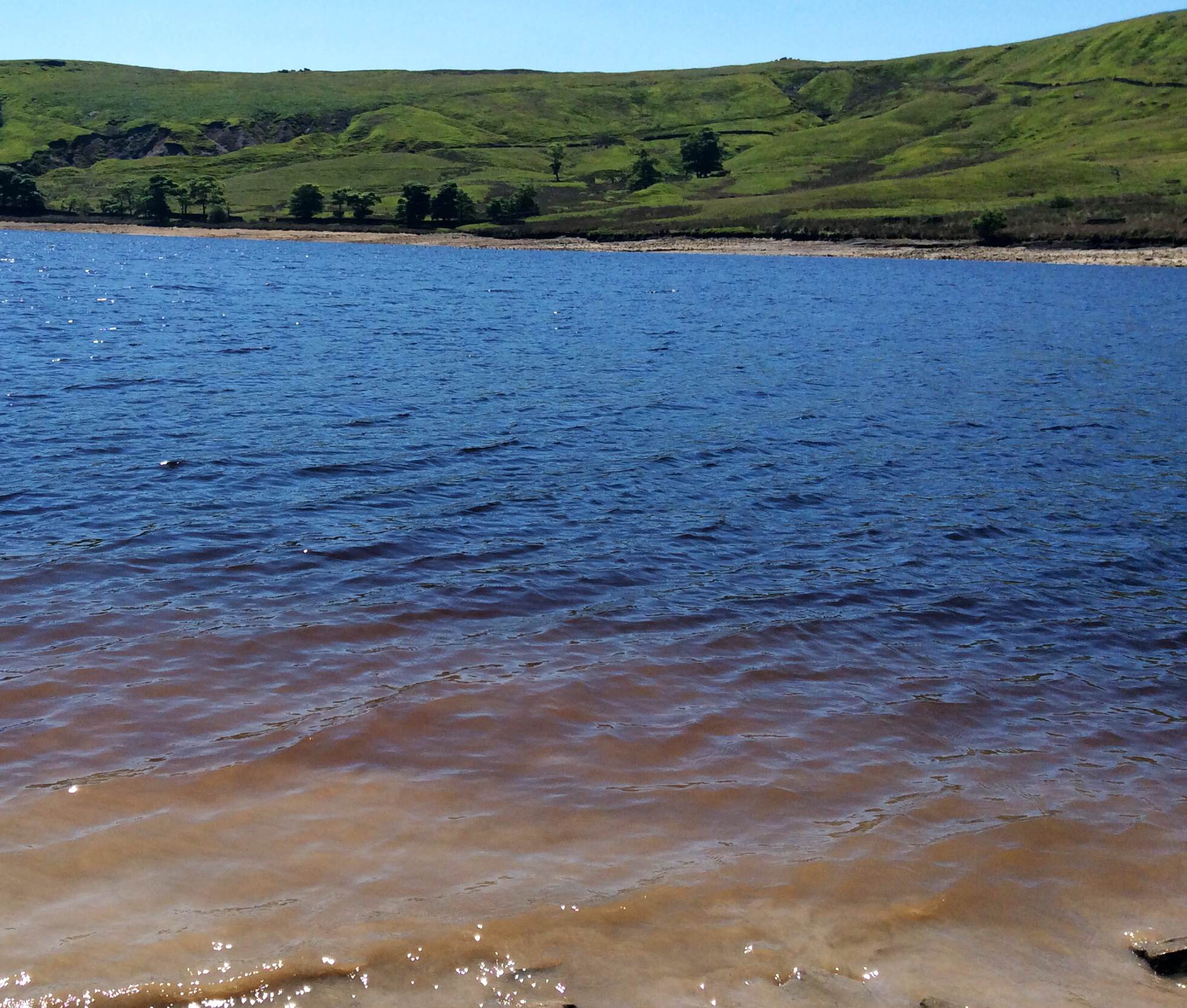
Widdop 3

It was so hot that most of us got into the water. My poem below attempts to sum up the joy of the moment.

BATHERS AT WIDDOP RESERVOIR

At the shoreline, sapphire bleeds into brown and rust.

It’s thirty degrees and there’s a heap of us
removing walking boots and socks
to take a dip in Hughes’s ‘frightened lake’,
despite the DANGER sign warning against it.

But we do have to mind our step:
treading water is like marching on soap.

Four legs are better: unleashed best-friend mongrels –
Dexy and Alfie – splash my socks
with clay-like mud. One of us dangles
legs from rocks.
Another ventures further out, red-hatted,
immersed to her waist.

Re-socked and booted,
we’re accompanied back to the cars
by a flute band of sandpipers
who scoot along drystone walls from post to post.

Every sun-fed one of us is as properly gripped
as bright adolescents on a Geography field-trip.

Published by


Response

  1. The poetry of reservoirs – Matthew Paul

    […] You, my regular reader, may remember that several of my blog posts have been inspired by those of Matthew Stewart. In this case, it’s slightly different: a welcome instance of synchronicity.It must be difficult to be a poet in Yorkshire and not feel a need to write, at least once, about reservoirs. Near where I grew up, in south-west London, the reservoirs were more often not forbidding places with no or limited access, surrounded by high walls, which kept the water out of sight, and grassy banks grazed by strangely suburban sheep. When they were visible, the water was enclosed by undisguised concrete. Some are havens for urban birders – Stephen Moss undertook much of his formative birding at Staines Reservoir.Those in Yorkshire tend to be tucked away, in moorland hills, and properly absorbed into their environments. Therein lies their beauty, perhaps: the knowledge that even though we, and the creatures who live in and around them, appreciate them as natural lakes (and who doesn’t love a nice lake?), they are artificial , existing only to be functional; to provide clean water to the great conurbations of the Ridings. Peter Sansom’s marvellous ‘Driving at Night’, the opening poem of his 2000 collection Point of Sale, begins:The res through treesis a lake or calm sea on whose far shorea holiday is waiting, a fire laid in the grate,the larder stocked with tins, milk in the fridge,and on the hearth a vase of new tulips.I know instinctively what he means. The contentment invoked in those lines is topped off by that ‘new’: these are pristine tulips, with no sign yet of their heads drooping.I’ve mentioned previously Ted Hughes’s poem ‘Widdop’, about the reservoir of the same name a few miles north-west of his house at Lumb Bank, which he subsequently gave to the Arvon Foundation. Its opening lines are as vividly memorable as Peter’s:Where there was nothingSomebody put a frightened lake.When I spent a very hot week at Lumb Bank in 2018, I wrote my poem ‘Dawson City’, set against the backdrop of the making of the Walshaw Dean reservoirs between 1900 and 1912, and one, channelling Seurat, called ‘Bathers at Widdop Reservoir’.) […]

Leave a comment