Here’s my latest OPOI review for the ever-excellent Sphinx. There are some cracking reviews of what sound like cracking pamphlets on there at the moment, e.g. Ramona Herdman on Cliff Yates, Mat Riches on Martin Stannard, and plenty more besides, so fill your boots.
-
Snow Biz
When I start my weekly Sunday run, at 9.33, it’s just starting to snow. I presume, though, that it will be nothing more than the lightest, icing-sugar dusting. It hasn’t snowed properly in this corner of north-east Surrey / south-west London for about six years, but down it comes. To run through it is a full-on, sensory, exhilarating experience.
refilled as quickly as I make them footprints in the snow
I watch my footing and slow my pace: I’m sure that pitching up at A & E with a broken ankle would not endear me to the brave, fantastic folk at Kingston Hospital.
snow settles
on a small allotment:
the bean canes aslant
An hour and a half later, my feet are enjoying the creak through the gorgeous compactness of the snow. Victoria Park, in Surbiton, provides enough space for socially-distanced snowball fights. The pavements on Brighton Road are all but empty.the one-man band
strums to no one
swirling snow
At home at 11.07, my hands are numbed in my pink and black gloves. I have to warm them on the radiator by the front door before I can get them off and untie the laces on my drenched running shoes.
the only traffic
in endless snowflakes:
speedy foxBefore long, I’m happily re-heating in the bath, the bubbles echoing the snow.
even through the frosted glass snow light
2, 3: from The Lammas Lands
4: from The Regulars
-
Bloody politics
After this week, it’s hard to discuss anything but politics on some level: chiefly, that failed coup incited by the supposed Leader of the Free World and put down with considerably less lethal force and speed than last year’s Black Lives Matter protests were; but there’s barely any moral high ground here in England where our disgraceful government has presided over more than 80,000 deaths from Covid (and those are just the official figures) and pushed the NHS to the brink of collapse, and headteachers and so many others to despair. Meanwhile, Stanley ‘Acquiring French citizenship and vaccinated’ Johnson is all right Jack, as is Murdoch. Still plenty of idiots say or imply, ‘They’re doing their best’ – yes, to line their and their donor-friends’ pockets. Of course it’s impossible to take to the streets to protest during the Covid lockdowns. As Robert Lowell observed in 1964, ‘a savage servility / slides by on grease’. The only people who are out protesting here are the scarily gormless anti-vaxxers and Covid-deniers, with many of whom I had a seemingly endless Twitter spat back in August.
So it’s been appropriate for me that one of my poems published this week in #36 of Poetry Salzburg Review is (mildly) political: ‘The Ballad of Mike Yarwood’. Yarwood was the first variety act I ever saw in person, when I was five, at the Winter Gardens Theatre in Bournemouth, with Peters and Lee as the music act. At home and at junior school, we all loved Yarwood, and he ‘spawned the nation’s mimicry’ in playgrounds and workplaces alike. But having made a fortune from impersonating politicians and celebrities of different kinds, he became a Tory donor and cheerleader and drank himself off our screens. My poem’s ending sees him stuck in one of those hideous Apartheid communities for the absurdly rich which litter parts of the Home Counties and elsewhere, and which JG Ballard described so chillingly in Cocaine Nights and Super-Cannes.
I should add that one of my other two poems in Poetry Salzburg is ‘The Pigeon Fancier’s Daughter’, and had I known that Mat Riches was such a racing pigeon aficionado before I sent the poem off, I may well have dedicated it to him.
-
On the haiku of Thomas Powell
New Year’s Eve saw the publication, by Snapshot Press, of Thomas Powell’s debut collection of haiku, Clay Moon. I was fortunate to read the book in manuscript and honoured to be invited to write an endorsement. I’ve watched Powell develop into a haiku poet of distinction and skill, who in particular writes beautiful nature haiku. I’m certain that Clay Moon won’t be bettered by any other haiku collection this year,
As the title of his collection hints, he’s a potter. A few years ago, when I edited the ‘expositions’ – i.e. essays, features and interviews – section of the online journal A Hundred Gourds – I commissioned Powell to write an essay about the interplay and similarities between the craftsmanship of his day job and that of his haiku writing.
Of late, he’s taken to writing in his native Welsh as well as English, which is doubly interesting in that he doesn’t live in Wales, but in the North of Ireland. One of his haiku in the latest issue (#68) of Presence attracted me through its implicit use of colour. I can’t be alone in seeing a reddish-brownness in each of the concrete nouns:peat-tinted river
the squirrel’s reflection
eating a mushroomHaiku concerning reflections in water (especially ponds and puddles) were done to death in classical Japanese haiku let alone English-language haiku of the last half-century, so it’s difficult to do so with any real originality, but Powell achieves that here by a careful attentiveness: that it isn’t the squirrel itself which he – and the reader – sees eating the mushroom but ‘the squirrel’s reflection’. Ordinarily, ‘peat’ might be unnatural, a poeticism; here, though, it looks and, crucially, sounds fine. In fact, the whole haiku is mellifluous on the ear, without being unnecessarily flowery. The rhyme between ‘peat’ and ‘eat’ is unobtrusively helpful. Clay Moon is full of haiku as good as, and better than, this one.
-
Hibernation
No thorough end-of-year review for me, as much because my memory of what I’ve done and what I read in 2020 is scratchy at best. The comparatively giddy days of January to early March, pre-Covid, seem as though they happened years ago. I certainly don’t have 2020 vision.
If I had to choose a couple of new poetry collections which, for their consistent brilliance, I savoured more than most, they would be Alan Buckley’s Touched and Nichola Deane’s Cuckoo. That said, I haven’t yet got round to reading several 2020 collections, including Pascale Petit’s Tiger Girl and Eavan Boland’s sadly posthumously published The Historians. (Compiling best-of lists is fraught, naturally, with the possibility of omissions to be regretted at a later date.)
Anyway, onwards. I’ve been reading and enjoying the latest issue of Poetry Review. It truly contains a wide diversity of poets, many of whom, I suspect, haven’t been published in the UK before. There’s also an insightful, wide-ranging interview, by Elaine Feeney, with Margaret Atwood, in which the latter, though apparently rather impatient, is nevertheless reflectively articulate throughout, as one would expect:
The difference between writing a novel from writing poetry is in novels our work is one part inspiration and nine parts perspiration. Whereas the work involved in poetry comes after you’ve written it. You have the poem, but then you have to see what you actually wrote down, can you read it, I mean, that’s always a challenge.Most interesting for me is an essay by Charles Whalley, which, taking its cue from the case of Maggie Hannan, examines why poets might stop writing after their first collection has been published. He wonders, ‘Maybe the question isn’t why do poets stop writing, but why does anyone start?’ It’s a good question, and the usual trite reply – ‘Because I have to’ – trotted out by poets, me included, isn’t sufficient. To go further and say, or think at least, ‘Because I believe I have something original to say which may be of benefit to others’ has an innate confidence, bordering on arrogance, which poets often have in short supply. Perhaps it’s what springs from that contradiction which makes poetry so intriguing.
The bitterness shown towards 2020 for obvious reasons is laughable, as though 2021, with the promise of mass vaccination and a return to some semblance of ‘normality’, will stand in great contrast to it. As a historian said on the radio yesterday, diseases don’t respect chronological boxes, so the expectation that 2021 will soon provide a marked improvement in the general commonwealth, that everything will be hunky-dory by the spring, seems fanciful right now, though it could be the end of the beginning. In view of all that, hibernating with lots of poetry to read is a good option, isn’t it?
-
OPOI review of John Greening’s Europa’s Flight
My latest OPOI review is on the Sphinx website. The pamphlet I reviewed is very apposite, given all the dreadful, mendacious shenanigans of Brexit. It’s also excellent, as one would expect from the pen of John Greening. As ever, there are lots of other, engaging reviews to be savoured.
Merry Christmas to everyone and anyone who’s stopped by to read my blog this year, and here’s to a better, healthier year in 2021.
-
On a haiku by Christopher Herold
early twilight
snow enters a barn
on the backs of cows
This haiku by the great American haiku poet, Christopher Herold, was the winning poem for ‘December’ in the Snapshot Press Haiku Calendar competition 2019. It was a very worthy winner.
The first line enables the reader to see that beautiful, colourful light at the start of the ‘magic hour’. The mention of the word ‘snow’ in conjunction with ‘twilight’ naturally makes the reader feel the coldness. But, above all, how brilliantly the poem captures a momentary movement in time by attributing the verb not directly to the cows but to the snow, and does so by putting the focus so specifically onto the backs of the cows. There isn’t a need for high-register language. It’s a timeless winterscape, perfectly rendered, like a painting by Brueghel the Elder.
The 2021 Haiku Calendar is available for order now and is unmissable.
-
OPOI review of John Mole’s A Different Key
Here’s my latest one-point-of-interest review for Sphinx. There are lots of other new reviews there too.
-
David Cobb, 1926-2020
I was saddened to hear the news earlier this week of the passing last Friday of David Cobb.
It’s fair to say that the overwhelming majority of haibun, haiku, tanka and renga poets in the UK may well not have become addicted to haikai forms without the enthusiasm and organisational ability of David Cobb. Although there were several UK poets – e.g. Keith Coleman, George Marsh, Peter Finch, Stephen ‘Tito’ Gill, James Kirkup, Brian Tasker, Chris Torrance and Bill Wyatt – already regularly and successfully practising those forms well before then, David’s founding (with Kirkup and Dee Evetts) in 1990 of the British Haiku Society was the catalyst which led, in its first decade, to the likes of Annie Bachini, John Barlow, Richard Goring, Caroline Gourlay, Michael Gunton, Jackie Hardy, Cicely Hill, Ken and Noragh Jones, Martin Lucas, Fokkina McDonnell, Tony Marcoff, Matt Morden, Stuart Quine, Susan Rowley, Fred Schofield, David Steele, Alan Summers, Diana Webb, Alison Williams, Frank Williams, etc., and me, becoming deeply absorbed in the study of haiku and tanka and how these Japanese forms could be deployed in English. Without David, it’s highly likely that there would have been no Presence, no Snapshot Press and no outlets for what has become a sizeable, albeit rather fragmented, UK haiku community.
David was the driving force of the society in its early years, enabling it to gain charitable status through its educational role; and not least in his attempts to forge a consensus as to the qualities which haiku in English should retain from the Japanese original. He was sometimes derided for this by some of the freer spirits among the UK haiku community who had been writing haiku well before 1990, but the irony was that he had provided them with a quarterly journal, Blithe Spirit, in which their output could be regularly published. David engendered a pluralistic, diverse community, with links to Japanese companies and cultural organisations, including Japan Airlines and the Daiwa Foundation – at the Regent’s Park HQ of which the society’s events took place for its first decade or so, before a move to the Conway Hall, the epicentre of humanism and leftfield politics and culture – and with other European haiku organisations. David was always there in the background, ready to step back in to provide help and advice if needed, in some ways like a father. Events were held and tributes paid by the society to David for his eightieth and ninetieth birthdays.
As a poet himself, David was a fine purveyor of haiku, with a particularly fine line in wry, often self-deprecating senryu. Along with Ken Jones and Diana Webb, he was a major pioneer of haibun in the UK. His Spring Journey to the Saxon Shore (1997) was perhaps the first long haibun by a British poet to be (self-)published. David’s haibun showed the influence of English writers such as RH Blyth, Kevin Crossley-Holland, Richard Jefferies and Edward Thomas. He was also an excellent anthologist, as evidenced by the British Museum Haiku, Euro-Haiku , the Iron Book of British Haiku (with Martin Lucas) and the Humours of Haiku.
David’s life was unsurprisingly full of diversity. His brilliant, though unpublished memoir, Or So I Say, recounted a happy childhood in Harrow, where David Jones also grew up, his call-up into the army in the closing years of the Second World War, and the period up to his return to civilian life in 1948. He seemed to have spent much of his army life playing cricket – indeed, the memoir recalls his bowling averages with a pinpoint accuracy that would, I suspect, deter most readers – and having to choose between representing his regiment or the army as a whole (the former always won out). The memoir goes on to observe some horrors in Italy and then to deal, beautifully, with love and unbearable tragedy.
With a degree in German from Bristol University behind him, David taught English as a foreign language in various countries and wrote several books on the subject. I remember him saying once that he spent a period in the Fifties as the stadium announcer at Stamford Bridge. David also wrote non-haikai poems, especially in his last few years, and some of them were very good. I hope that more of them might see the light of day.
Although many other people knew David better than I did, he and I were irregular correspondents for years and I was always delighted to see him. Aside from his writing, what I will remember most about David are his kindness, humility, good humour and that rare gift of being able to bring diverse people together in an inclusive and generous manner.
Here is one of David’s best-known haiku, remarkable still for its fresh, immediate synaesthesia:a moment between
lighthouse flashes
cold smell of fishA lesser poet than David might’ve chosen to omit ‘a moment’, which, on the face of it, appears superfluous, but that would’ve considerably weakened the power of this masterpiece. Whilst less is generally more in haiku, here a little bit more is definitely more: those two words enable a visual and sonic pause at the end of line one which enhances the surprise of the second line; and it also enables a subtle repetition in ‘cold’ of the ‘o’ sound in ‘moment’, which helps to knit the poem together. That lesser poet might also have been tempted to shove a definite article before ‘cold’, but, again, that would’ve been ruinous because that absence draws the maximum impact out of ‘cold’, and out of the monosyllabic incantation of the last line.
-
The Day of the Dead
It’s appropriate that today is the day on which my brothers and I have completed the sale of our parents’ house in Worcester Park, where they lived from 1988. On Saturday, I visited the house for the last time to check that all was well, but more to say goodbye to a place which contained so many memories and mixed emotions. We have to move on of course, and the sale provides a sort of ‘closure’ seventeen long months after the death of my mother.
Since I was 15 or so, I have associated the Day of the Dead with Malcolm Lowry’s extraordinary novel Under the Volcano, which is up there – with the likes of Orlando, Mrs Dalloway, The Card, The Towers of Trebizond, The History of Mr Polly, A Meeting by the River, Coming Up for Air, The Rainbow, G., The Man Who Was Thursday, On the Black Hill, The Sword of Honour trilogy, etc. – among my very favourite 20th Century novels by British writers. Like Mrs Dalloway and Ulysses, it’s set within the space of one day, in this case ‘El Día de Los Muertos’.
Shortly after I arrived in Portrush in the autumn of 1985, I borrowed from the university library in Coleraine all the books by Lowry which I’d not read before. The north coast of Antrim seemed like the sort of place Lowry would’ve written about brilliantly; and being then as fond of writing prose as well as poetry, I set about writing Lowry-influenced stories. Alas, I didn’t keep them, though I strongly suspect they weren’t much cop anyway.
Lowry was by all accounts a rather unpleasant fellow, but his vast consumption of Mexican booze can’t have helped with that. In the first Lockdown, I read all the books I could find on the great painter Edward Burra, whom Jonathan Meades, in a Radio 4 Great Lives broadcast, rightly called ‘the greatest watercolourist imaginable’. I will write more about Burra, and how I have responded to his works and influence, in due course, but when, in 1937, he, with Conrad Aiken and Mary Hoover, travelled from Boston to Cuernavaca (where Under the Volcano is set), for Aiken and Hoover to get married and to visit Aiken’s friend and mentee Lowry, the experience nearly killed him. For all Lowry’s travels throughout the Americas, it’s an oddity that he died in the Sussex village of Ripe, only 33 miles from Burra’s home in Rye, the ‘Tinkerbell Towne’ as he called it.
On this particular All Souls’ Day, it’s hard not to think of the lives which have been lost in this pandemic, and how, if governments had prioritised health before profit, many of those deaths could surely have been prevented.
-
On Keith Hutson’s Baldwin’s Catholic Geese
Is it just my perception or have UK poetry reviews and criticism generally become – with the exception of one completely ludicrous, notorious and discredited outlier – kinder in the last few years? It’s within that context that I was surprised by the tenor and content of Rory Waterman’s review of Keith Hutson’s debut collection Baldwin’s Catholic Geese for the latest issue (#255) of PN Review.
I will declare my interests at this point: Keith Hutson is a friend of mine, whom I met for the first time at a Magma launch at the LR Bookshop shortly before we were both participants on the 2017–2019 Poetry Business Writing School. Keith is also one the editors of Poetry Salzburg Review, who published three of my poems in #34 and will do so again soon in #36. Like Keith, Rory Waterman is a poet whom I admire: each of his three collections has a place on my shelves, immediately to the right of books by his father, Andrew Waterman. Waterman père was a lecturer in English at the University of Ulster when I was a student there in the mid- to late-Eighties, and he had a certain extra-curricular reputation. Waterman fils’s most recent collection, Sweet Nothings, contains arguably his best poem to date, ‘Like Father’, a response, a riposte surely, to the painful, barely readable 12-poem sequence, ‘A Father’s Tale’, in Waterman père’s 1990 collection In the Planetarium, which dealt with his unsuccessful custody battle for the infant Rory.
Waterman fils reviewed Hutson’s debut collection Baldwin’s Catholic Geese for the latest issue (#255) of PN Review but didn’t, to my mind, do it much justice. The collection’s title recalls one of the many obscure and often bizarre Victorian and Twentieth Century Music Hall entertainers which a proportion of its poems celebrate, with pathos and bathos where appropriate. Waterman is right to note that as first collections go it is ‘unusually fat’, but it seems a little peevish to add that ‘it is hard not to feel that this is a superb pamphlet bloated into a chunky collection’, not least because the collection was actually prefigured by just such a pamphlet, Routines. And if one were to be uncharitable, one could argue that to accuse another poet of excessive exposure is not especially prudent if you’ve had three full collections published yourself in the last eight years.
Moreover, the succession of act after act, each with their two minutes of glory, resembles the bloated nature of Music Hall bills. That famous celebration of just such a bill, ‘Being for the Benefit of Mr Kite’, derives from Lennon’s chancing upon, in a junk shop, a poster stuffed with Music hall acts. (Rob Chapman devotes an excellent chapter in his 2015 masterwork Psychedelia and Other Colours to ‘The Psychedelic Music Hall’, taking in – as well as the Beatles – The Kinks, The Who, The Small Faces, early Bowie and much else besides.) There are shades of Archie Rice’s over-reaching self-regard in a number of the acts which Hutson highlights: take Professor Cheer, ‘The Man with the Xylophone Skull’:
Let’s hear it for this prematurely bald
headmaster: struck by the disquieting fact
his crown – hit with a brass door-handle – could
resound, a bell, his temples too, he taught
himself to scale an octave, frontal bone
to back, and at the Christmas show knocked out
a carol, Ding Dong Merrily, performed,
he quipped (as teachers do) on high! But what
should have stayed a daft percussion act at school –
festive morale – didn’t.
It’s the accidental discovery of such an unlikely talent, and how Hutson, like a meta-poet, inserts his asides, such as ‘as teachers do’ and what might otherwise be read as an apparently line-filling throwaway ‘festive morale’, which give the poem its authority, from a viewpoint which invites our amusement and bemusement but steers clear of asking us to make any moral judgement. Hutson treads that path with perfect balance throughout the book.
Then there’s the matter of the socioeconomic background to the more obscure artistes: in many cases, entertainment provided them with an escape into a world of money. Hutson distils the life of Joan Rhodes, strongwoman, in the punningly-titled ‘Coming on Strong’:
Three and in the workhouse, ten when you ran,
missing till twenty then, as lean as luck,
in fishnets at the fair, you tore a phone book
up, bent iron bars, broke nails, took four men
on at tug-of-war and won, which led to
lifting Bob Hope while Marlene Dietrich
loved a woman tough enough to keep
refusing King Farouk, who wanted you
to wreck his best four-poster bed with him
still in it.
This is economical, witty writing which moves effortlessly, it seems, through the subject’s biography, and does so within the rhyming and syllabic constraints of an ABBA ABBA ABBA DD sonnet. Yes, ‘-rich’ doesn’t rhyme perfectly with ‘keep’, but sometimes such anomalies are unavoidable in order to make a poem work.
It’s also the case that a significant proportion of the poems are set within living memory, encompassing such subjects as Charles Aznavour, Hylda Baker, The Ray Coniff Singers, Freddie ‘Parrot-face’ Davies’, Les Dawson, Percy Edwards, Dick Emery, Gracie Fields, Frankie Howerd, Anthony Howell’s performance art, Jimmy James, Bob Monkhouse, and the young Hutson’s trips to the cinema to see Doctor Zhivago and Mary Poppins.Waterman identifies what he calls the book’s ‘central failings: the enjambments are sloppy, the last phrase cliched, and the poem nothing more than its admittedly memorable anecdote’, but fails himself to provide any examples to support his charges. That omission wholly undermines such criticism. For me, they are strange denunciations, because Hutson is a fine formalist, particularly of sonnets, which make up 65 of the book’s 100 poems and which he carves up in an apt variety of ways.
Hutson is especially good when writing about masculinity:
Frank – old classmate,
animal – who, massive at fifteen,
found me half-naked in the changing room,
scooped me up and, singing Diamonds Are Forever,
tossed me like a towel into the showers.
This because I’d joined a cycling club
which Frank decided made me homosexual
The Head suggested Francis can be boisterous.Hutson deftly depicts Frank’s reduction forty or so years later to a sad man–child creature:
Now, approaching pension age and run to fat,
he’s in the Civic Centre, wringing the neck
of a bell, licensed at last to cause alarm,
make children cling to mums who stoop and flinch.
The image reminds me of the all-American males reduced to pitiful figures in Robert Lowell’s ‘Waking in the Blue’, with its superb line, ‘These victorious figures of bravado ossified young.’ Hutson’s enjambment of ‘wringing the neck/ of a bell’, far from being sloppy, is cleverly done, conjuring up a picture of a man who would be perfectly suited to be a slaughterman; and that ‘licensed’ neatly underlines that Frank is certainly no James Bond.
One might conclude from Waterman’s condescending conclusion – ‘Every poem comes with a sprightly note about its subject, and perhaps the greatest lasting pleasure this book will give you is several hours disappearing down internet rabbit holes as you shadow the author’s impressive research’ – is that what he wants to say is, ‘Jolly well done on the research, but shame about the poems’, which is grossly dismissive. Given that the book’s glowing endorsements come from Carol Ann Duffy, Peter Sansom and Michael Symmons Roberts, Waterman’s verdict is also more than a little against the grain and makes me wonder just how much time he gave to reading the book with care.
My own verdict on Baldwin’s Catholic Geese is that it lays bare, in a way which surely refracts on today’s celebrity culture, how natural an ambition it is to aim for fame and fortune by any, and sometimes bizarre, means; and that to fail in doing so is equally as natural – so few entertainers stay on the top of their game for the duration of their careers and it’s only human for the overwhelming majority to have no more than a fleeting moment in the limelight. That’s hardly an original thought (c.f., for example, ‘Life’s but a walking shadow, a poor player that struts and frets his hour upon the stage and then is heard no more’), but Hutson explores the highways and byways of that ambition in a rich way that emphasises his subjects’ egos, successes and flaws without ridicule and more often than not in joyous, zestful language.
-
Dave Bonta’s videopoems
Through his weekly digest, Dave Bonta has done so much for poetry bloggers – me included – during the pandemic that it’s time for me to shine the light back onto Dave’s own creatvity: his videopoems are outstanding, innovative mixtures of text, video footage and music. The latest, Catching a Cranefly, is a perfect example, where his nicely understated solo renku, with subtle links and shifts, combines perfectly with beautiful imagery and an excellent, but not overpowering soundtrack. But it’s also worth finding the time to check out Dave’s previous work. All good stuff.
-
Beer o’clock
As I’ve noted previously, in the last stage of my second Poetry Business Writing School I was grouped together with James (Jim) Caruth and Philip Rush, very fine poets both. One of the tasks which Ann and Peter Sansom set us (and the other groups) was to rank five poems and write about why we had put them in that order: ‘North Sea off Carnoustie’ by the late Anne Stevenson; by ‘Small Talk’ by Warsan Shire; ‘Variations for Two Pianos’ by Donald Justice; ‘There are Lime Trees in Leaf in Promenade’ by Tom Raworth; and ‘November Evening’ by Patricia Beer.
Not surprisingly, the three of us had differing views, though we agreed that the Raworth poem, despite having some lovely details, resonated the least with us because of its sprawling, Olsonian form and dated, anti-Vietnam-War message. Over the course of a couple of Zoom sessions and email exchanges, we compromised on the Shire poem as our first choice, since we all admired its defiant spirit and sense of a young British woman taking pride in her Somali heritage. The other three poems hovered somewhere in the middle.
Patricia Beer’s poem grew in my esteem, from initial bewilderment and annoyance at its bold stanza-to-stanza leaps to total admiration. It is an Imagist-ish depiction of autumn; almost the most autumn-y of autumn poems. Unfortunately, it’s not available on the web, but I thought I’d share another of her poems which is: ‘The Conjuror’. From that ‘last sparks of other people’s grief’ onwards, you know you’re reading a poet of genius. That the top hat is ‘made of blossoms’ is itself a trompe l’oeil, and the sentence beginning ‘We sensed’, with those two words teetering beautifully at the end of the second stanza, is perfect. The change then to the second-person address to the departed conjuror is beautifully achieved. It’s a poem which could easily have been over-egged, but manages in its four quirky yet wholly believable quatrains to conjure (yes!) a life out of death; and it’s worth listening to Patricia Beer herself introducing and reading the poem, in her Devonian tones.
-
Judith
I was interested to read Jonathan Jones’s Guardian review of the Artemisia Gentileschi exhibition at the National Gallery. It’s an important show, which rightly seeks to claim Gentileschi’s ‘greatness’, as Jones calls it, as a woman artist among the traditional pantheon of almost exclusively male painters.
The physicality of her painting of ‘Judith Beheading Holofernes’ reminds me of another rendering of the same story, by another great artist, the poet Vicki Feaver: her Forward-Prize-winning poem ‘Judith’, from her essential 1994 collection The Handless Maiden, which strikes a perfect balance between the sensuality and calculated violence of this tale from the Apocrypha.As a poet, Feaver has the advantage of including a back-story of motive for the murder; Gentileschi, of course, is unable to do that, but her own motivation, outlined by Jones, clearly informs the unflinching manner of her depiction. Ultimately, the result is more-or-less the same: Gentileschi shows us blood dripping from Holofernes’s neck and a look of terror on his face, and Feaver likewise ends her poem, in an half-rhymed couplet, with the brutal truth:
And I bring my blade
down on his neck – and it’s easy
like slicing through fish.
And I bring it down again,
cleaving the bone.
-
Some autumn haiku
So here we are again, in what is marginally my favourite season. I thought I’d post some of my autumn haiku to mark it.
climbing the walls
of a disused youth club:
flowering hops
*
avocet bills
scour the lagoon bed—
hurricane’s end
*
autumn wind
a delivery of flour
to the bakery*
tucking a roll-up
behind his ear
the harvest sun*
shifting currents . . .
a coot scrambles
to keep mid-river
*
along the pine-lined lane lopes the lengthening Hallowe’en sun
*
leafless park
a sausage dog defends
the penalty area
*
the soft song
of the poplar-tops—
swans in flight
*
still dark down the street I whistle a tune from a western
1, 6, 8: from Presence
2, 5: from Wing Beats, 2008
3: from The Lammas Lands, 2015
4, 7: from The Regulars, 2006
9: Previously unpublished
-
Derek Mahon
I was sad to hear of the death, on Thursday, of Derek Mahon, some of whose collections, most notably The Hunt By Night (OUP, 1982) and An Autumn Wind (Gallery Press, 2010), are among my very favourites. He was a supremely elegant poet. Over at The High Window, David Cooke has re-posted an excellent overview of Mahon’s career.
-
September stuff
Yesterday was my 54th birthday. With Covid restrictions in place, it was inevitably a rather quiet one; not that I would have lasted till the 10 o’clock pub curfew anyway.
I was chuffed to receive a copy of the lovely-looking 14 Magazine, edited by Richard Skinner, in which I have a poem called ‘The Bidding’. It’s been a busy week for poetry journals arriving: The Rialto, PN Review, The Dark Horse and Poetry Review all came too, so I have lots to read, besides all the books on the go.
Meanwhile, I’ve written a couple of reviews in the last week – my latest OPOI review for Sphinx and two longer ones which will appear in another journal early next year – and, to my surprise, had some poems accepted which I had almost given up hope of ever getting published, which is jolly nice.
Here’s a photo of the Thames this morning when I was pootling along to work. All very mellow.
-
The last six months
Six months on from the start of Lockdown in England, I’ve been reflecting on the good things which I’ve experienced during that period. Here is a list, in no particular order.
The heightened awareness of mortality caused by the scandalously high Covid death rates in the UK, USA and other countries run by right-wing fools has made me more than ever keen to use my time wisely. My productivity at work has had to become more prodigious thanks to some unforeseen events, such as the Minister for Schools deciding that lockdown during the Covid pandemic is the perfect time to close a primary school in one of the two London boroughs for which I work. I’m fortunate, of course, not to be a frontline worker who’s had to deal with the daily horrors of the pandemic. As a school place planner, it’s been frustrating to see the timelines for new state-funded schools, especially two desperately needed special schools, recede further into the future.
For the last six weeks or so, I’ve had an added role, of being our community interest company’s lead on ‘Outbreak Control Planning’, which means that, aside from attending lots of meetings with Public Health, I’ve had to work with my own Education and Social Care colleagues to ensure that our offices and other settings are ‘Covid secure’; that is, that they are each as safe as possible an environment for staff to be able to make a gradual return to the workplace. We have a bubble and rota system in place for teams and individuals who have made that return, so that in every fortnight they spend half their time in the office/setting and half at home. It is largely going well and enabling teams to make the robust collaborative decisions which they can only do properly when they are co-located. No doubt, though, the seemingly inevitable second lockdown will soon scupper our handiwork.
Outside my paid employment, my labour on my poems and reviews has also increased in productivity: I’ve been writing and editing poems with what I can only call fervour. I’m not quite like Anthony Burgess who, when told by his doctor that he had only six months to live, wrote four novels as a way of providing a lasting income for his wife and children, but I’ve certainly been on it. My output has pleasingly included at least three poems which have been hanging about in the back of my mind for years.
I’ve very much enjoyed the weekly blog posts compendium assembled by American poet, and all-round good egg, Dave Bonta. His generosity is much to be admired and the blogs which he’s highlighted have invariably been eye-openingly excellent.
I’ve also enjoyed poet and friend Kathy Pimlott’s photographs of virtually, and sometimes completely, deserted streets of London and Nottingham, which she has posted on Facebook and Twitter. Kathy’s attention to detail, especially of doors and gates, has been fascinating, but no surprise since her poems are rich with detail and depictive quality.
Much has been written about meetings by Zoom, Google Meet and the lamentable MS Teams. In general terms, I can only add that online work meetings have been more focused and more courteous, with much less interruption and talking over one another. For poetry, it’s been a boon, of course, enabling launches and readings to be attended from anywhere in the world, and Leicester. Not that I’ve been to that many – work’s been so full-on that frequently the last thing I’ve wanted to do of an evening is continue to stare at a screen. There have been some memorable events, though, chief among them Happenstance readings/webinars involving Alan Buckley and Charlotte Gann, in support of their respective brilliant recent collections. It isn’t the same as being there in person, naturally, because you can’t go and talk to the poets after and get them to sign copies of their books, or natter to other poet friends.
Write Out Loud Woking, hosted by the estimable double act of Greg Freeman and Rodney Wood, has seamlessly gravitated from the cafe in The Lightbox to Zoom, enabling guest readers from far afield to join in the fun, welcoming and diverse proceedings. I’ve tried out five or six new poems in those Zoom readings, which has been very helpful for hearing where the poems catch and need tweaking. More to the point, it’s been lovely to see all the regulars, like Karen Izod, Heather Moulson, Ray Pool and Greg and Rodney themselves.
The Red Door Poets have also moved to Zoom and at a time of day more conducive to my occasional attendance. I’ve also attended a few Poetry Business virtual residential weekends and one-off workshops, all of which were as inspiring as if they were in-person.
Heading towards the last session of this current, 2019–2021, Poetry Business Writing School programme, I’ve been grouped with Jim Caruth and Philip Rush, two poets whose distinctively personal poetries are right up my street. So far, we’ve had two very enjoyable Zoom sessions, comparing notes on various poets’ poems and workshopping our own, with another session due soon, shortly before the final Zoom session with Ann and Peter Sansom and the other participants. The plan is still, I think, that, Covid restrictions permitting, there will be an end-of-programme celebration next February or so at the Wordsworth Trust at Dove Cottage in Grasmere. I know from last time how exciting a prospect that is.
Regular readers of this blog will know that thanks to Kathy Pimlott and Mat Riches’s encouragement, I got in touch with Nell Nelson with a view to reviewing poetry pamphlets for Sphinx. In the last few months, I’ve written quite a few of them and much enjoyed doing so. I have another one to write now, plus some longer reviews for a well-known print journal. The MO of writing Sphinx reviews is not to dwell on the weaknesses of the poems or pamphlets as a whole, but to highlight their positive aspects. That brings with it an endearing nobility of spirit, albeit that I have sometimes had to stop myself from buying a one-way ticket to Superlative City – and very occasionally had the opposite problem. Reviewing is not just good for the soul, though: it also freshens one’s critical perception, which in turn improves one’s self-editing ability, and, like any writing, sharpens one’s concision too.
I’ve been glad to see a burgeoning interest in writing haiku among UK poets. Some, like the aforementioned Philip Rush and marvellous Julie Mellor have taken to it with real aplomb. Others, though, can’t seem to grasp that the point of writing haiku is not to churn out any old rubbish in three lines of five, seven and five syllables. Twas ever thus. My own interest in haiku has been revived, partly due to my involvement in an exciting forthcoming haiku project.
I further developed an obsession with the life and work of Edward (Ed) Burra, which has seen me buy and devour every book, and write a dozen poems, about him. I have some Burra research trips planned, Covid permitting.
I’ve been working my way through a 2007 biography of John Donne, by John Stubbs, which, whilst it contains some irksome anachronistic asides, sets out how Donne, an ironmonger’s son, turned from serial womaniser to husband/father and then, in widowerhood, to serial sermoniser as Dean of St Paul’s. It seems that Donne did everything he could to avoid taking holy orders and was far keener to gain a powerful post at Court which he would long ago have obtained but for his marriage to Ann More against his father-in-law and employer’s wishes. Interesting, too, was his pragmatic journey from his inherited Catholicism to High Church pillar of the reformed Church of England, especially given that his mother was for many years banished from England for her faith, that his brother Henry died a martyr and that several uncles and other predecessors were Jesuits. The regular occurrences of bubonic plague lend Donne’s story a contemporary resonance of sorts. Stubbs rarely contextualises Donne’s poetry to good effect, but as a book to fill in the gaps and flesh out the man, it does the job.
On the poetry front itself, I’ve been reading, amongst others, Mike Barlow, Jennifer Copley, Robert Hamberger, Ian Hamilton, Theophilus Kwek, Jackie Wills, and I have a large pile of goodies to tuck into this autumn, including more Ciaran Carson, Geraldine Clarkson, Jonathan Davidson’s A Commonplace, Julian Stannard and Derek Walcott. Besides all that, there are journals to read.
I’m very fortunate to have been featured on the websites of two outstanding poets, Fokkina McDonnell and Heather Moulson, and to have been part of John Foggin’s wonderful When All This is Over project.
When out running or walking, I’ve encountered far more instances of impromptu smiles and/or chats with strangers, which is rare in urban south-east England but always heart-warming. I hope that continues.
I shouldn’t forget the weather. Here, where Surrey escapes from London, it was a beautiful summer of sunny days in the main. Not that I often got much further out in the sun than my regular runs took me. The sunshine is persisting – for the moment.
-
Hampton Court haiku 4
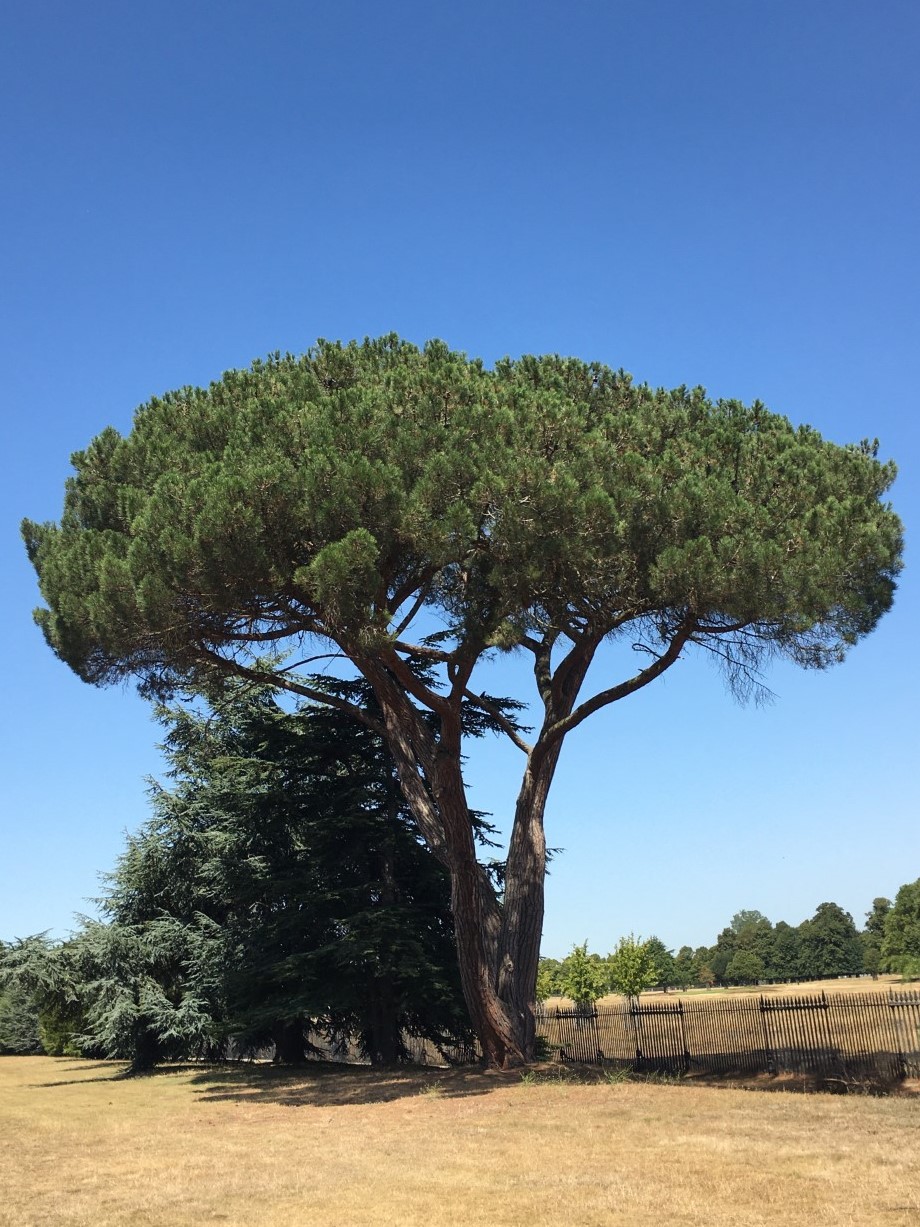
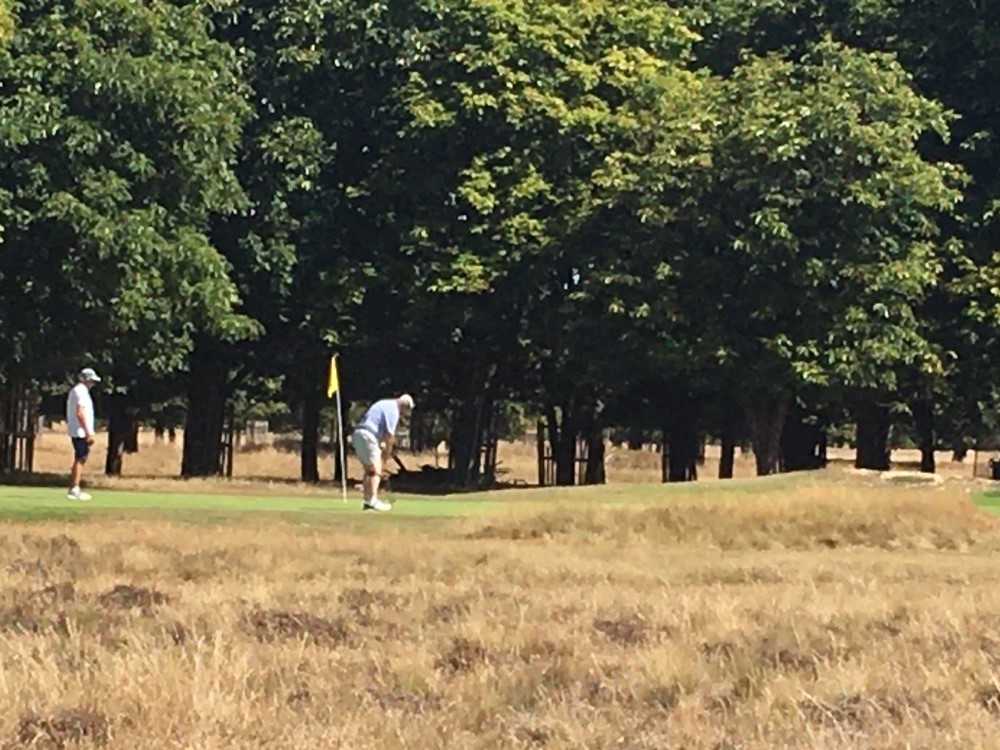
stone pine—
a golf buggy skirts
the parched fairway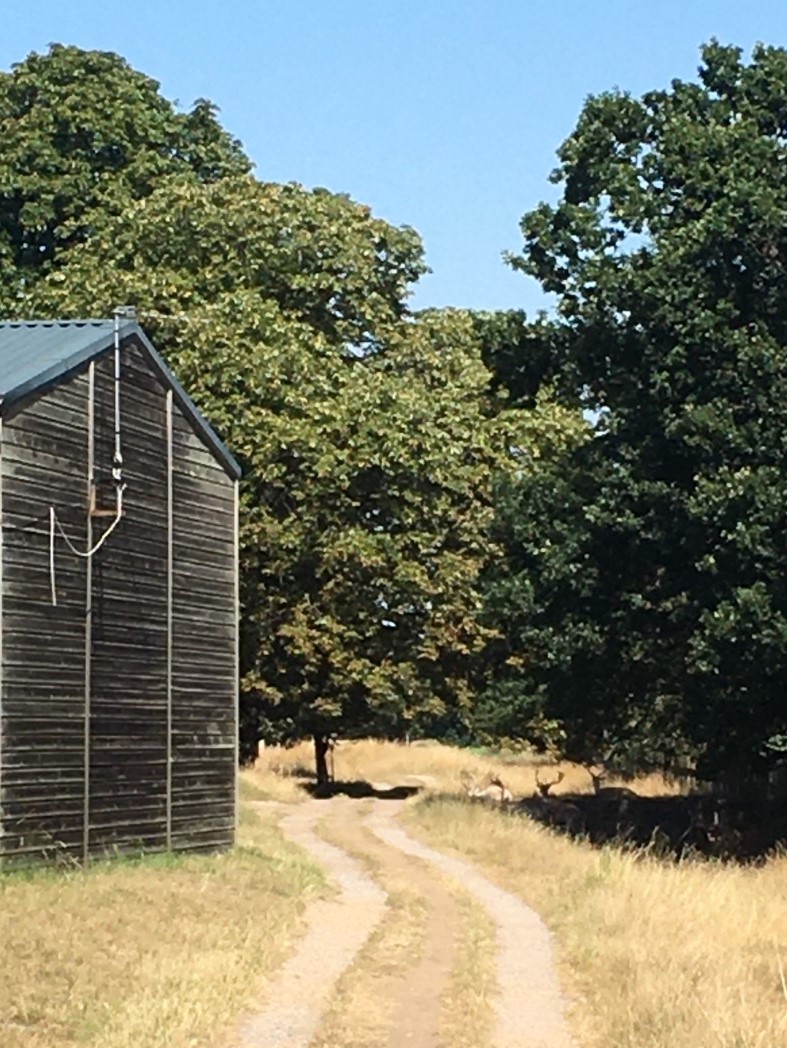
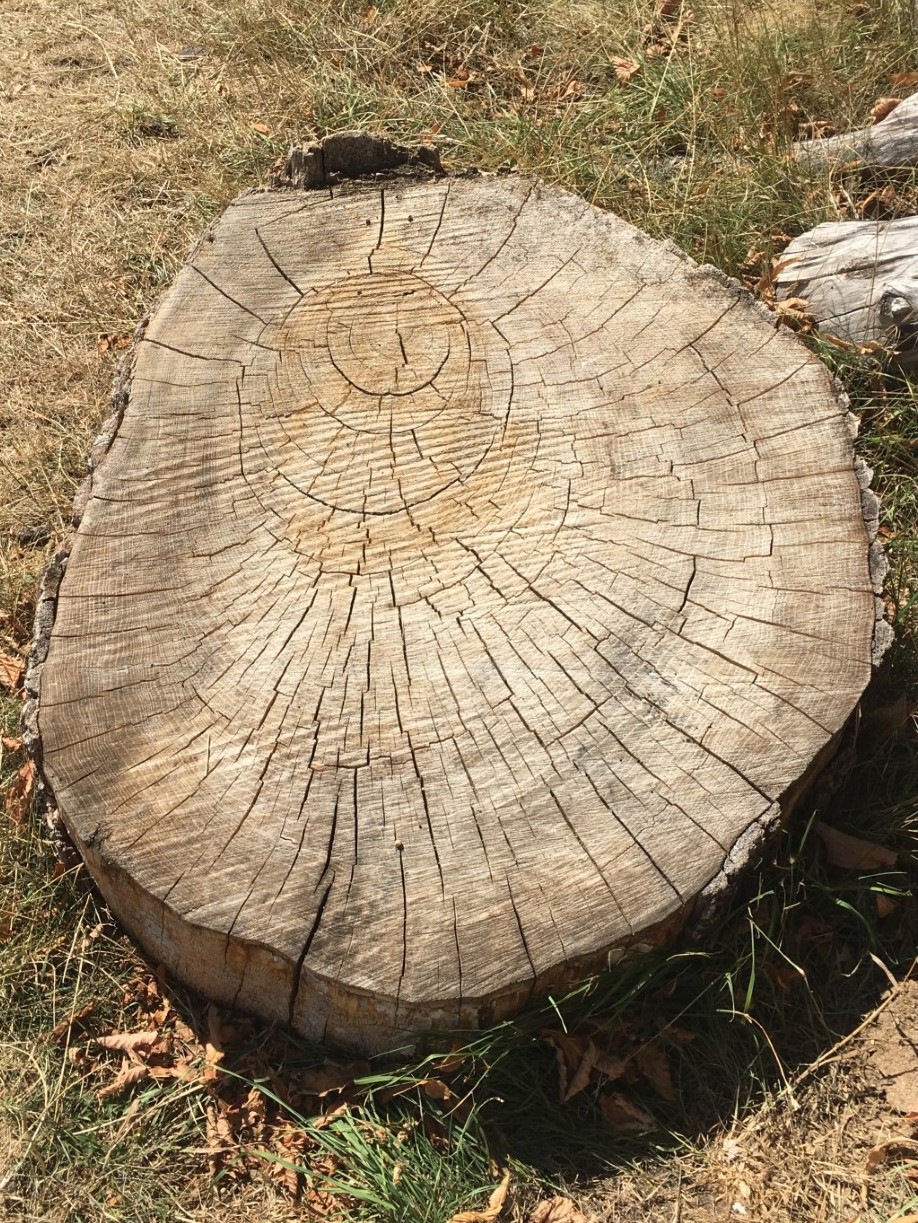

horse chestnut shade
the tiptoes buck stretches
to pilfer leaves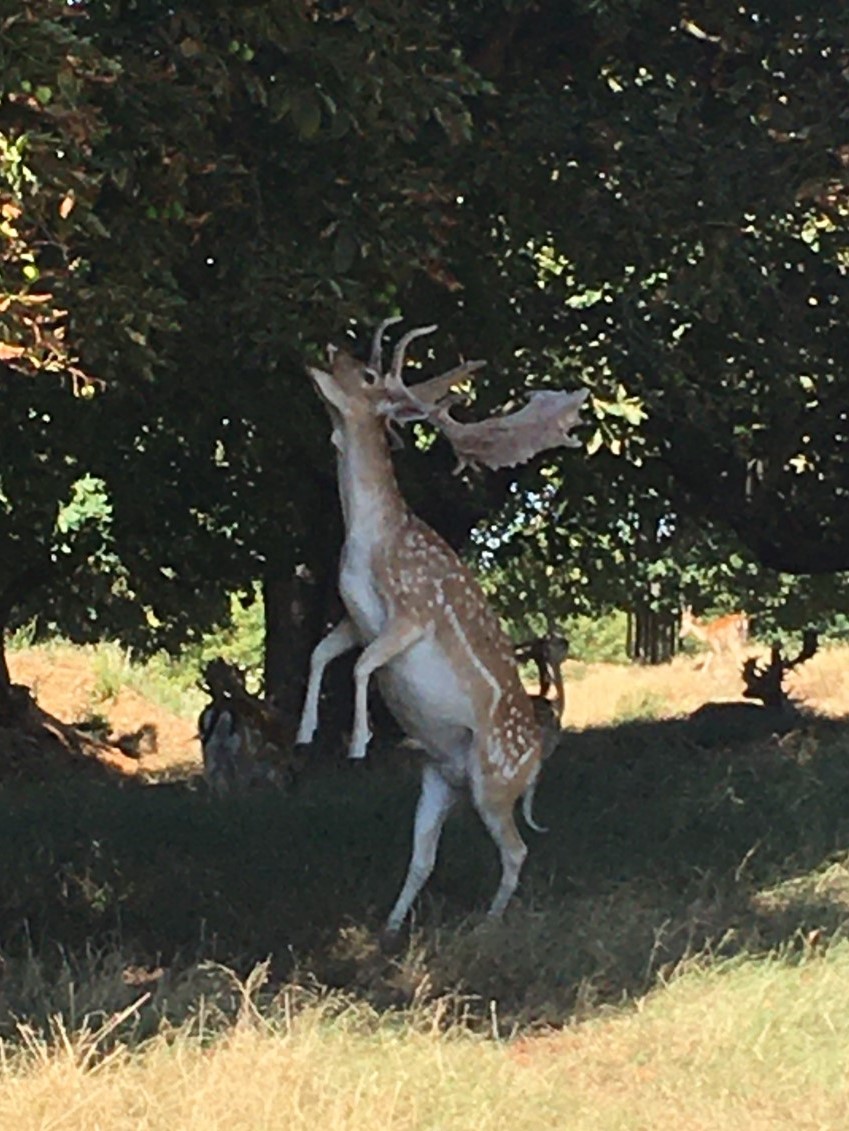
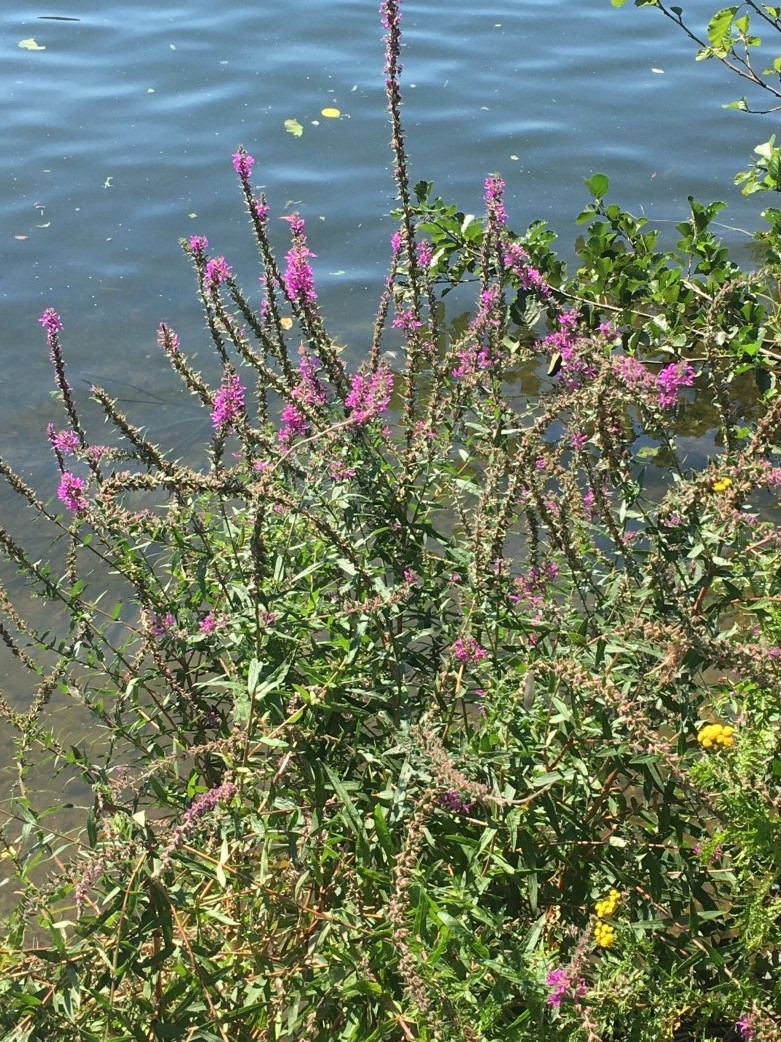

no room on the Thames
for swans to sprint into flight—
loosestrife and tansy
 Matthew Paul: Poetry & Stuff